









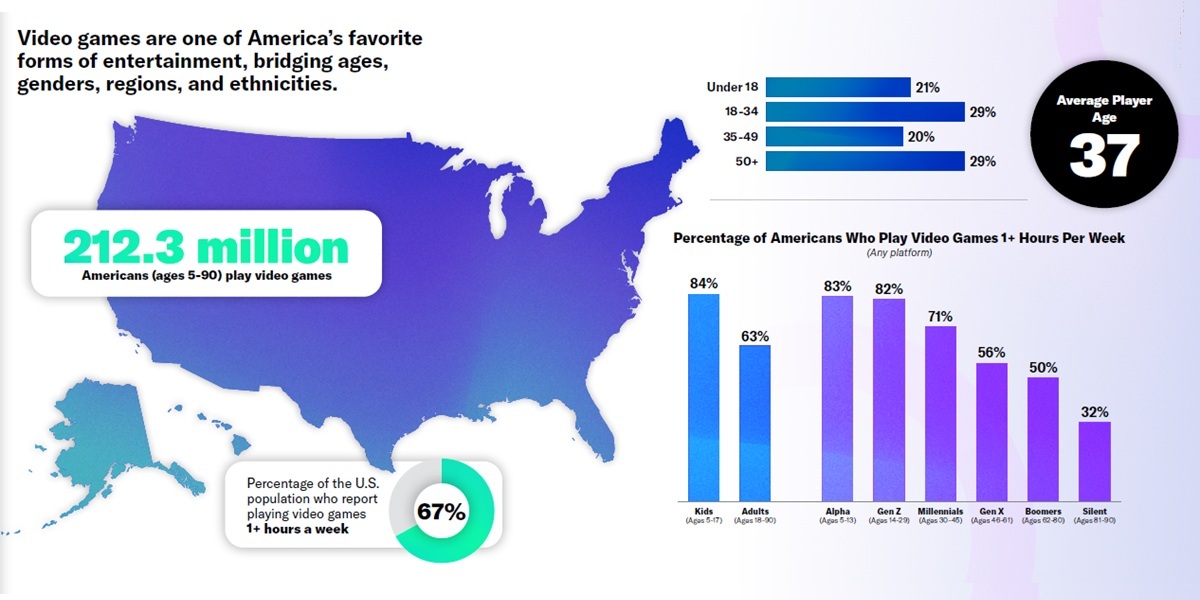
In 2025, more than 212 million Americans aged 5 to 90 played video games, according to the latest Entertainment Software Association data. The ESA’s 2026 Essential Facts about the US Video Game Industry report was conducted by YouGov from February 11th to 25th, 2026, surveying 13,545 respondents. This included 9,932 people who play at least one hour per week and 3,613 who play less than one hour or not at all. With 67% of Americans now playing games one or more hours per week, video games have cemented themselves as one of the country’s preferred choices for entertainment.
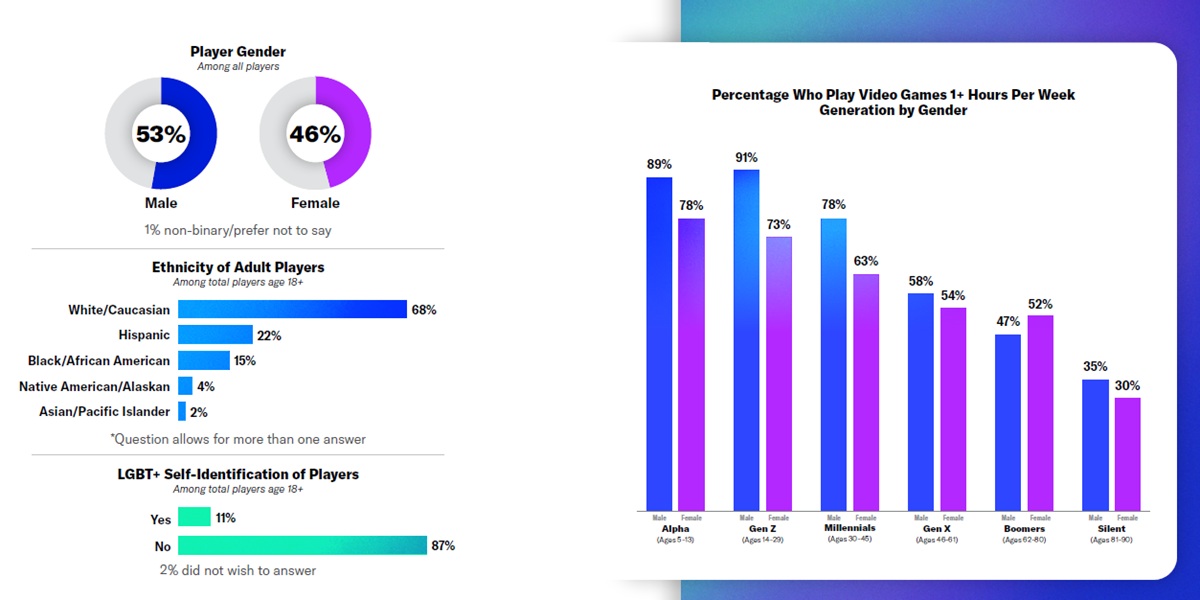
The study explores video game preferences across different demographics, regions, employment status and more. It founded that the average age of U.S. players is 37, with half of all players aged 35 or older. Active players are 53% male and 46% female. In the past year, 83% of U.S. households used at least one gaming device. Players spent 21% of their weekly screen time on games, averaging 12 hours weekly.

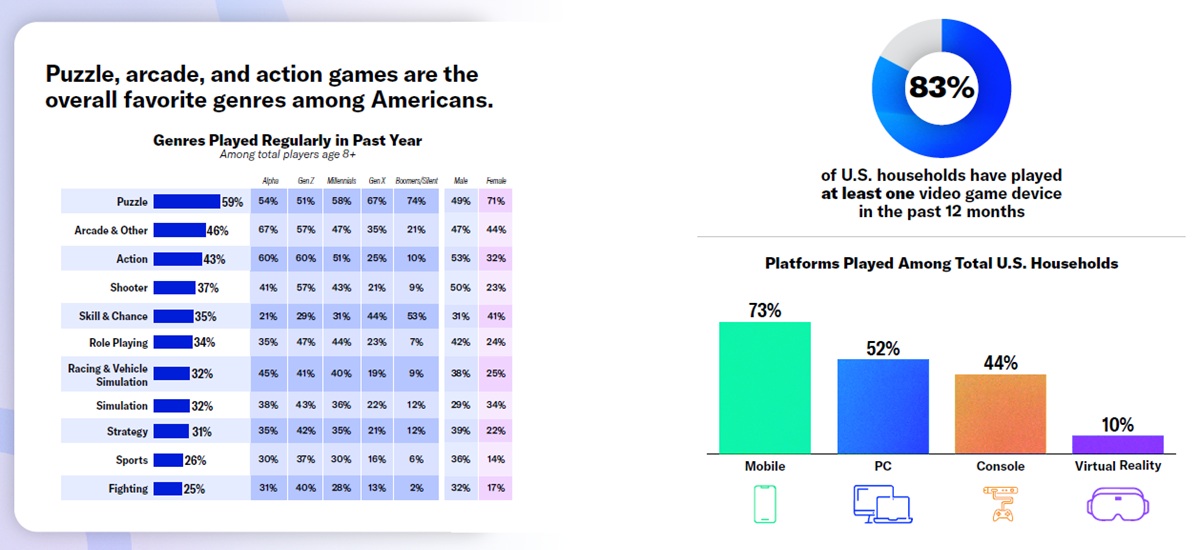
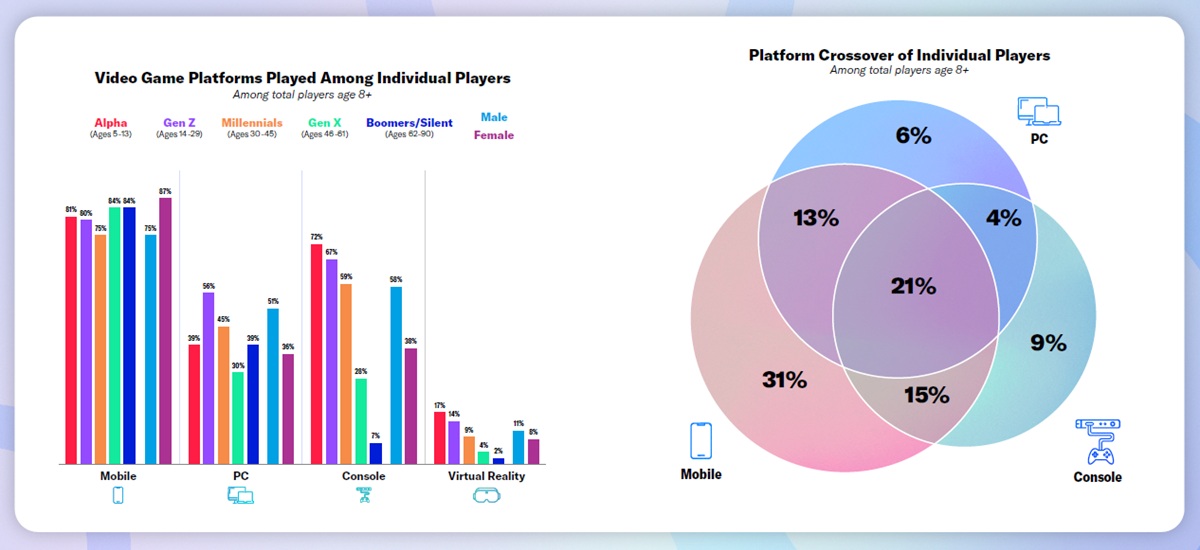
Mobile was the most popular platform, used by 73% of households and 80% of players aged 8 or older. Nearly a third of players use mobile exclusively. Mobile gaming remains popular across all age groups and is more common among female players. PC and console usage declines with age and is more common among male players. Overall, 52% of players use PCs, 44% use consoles, and 10% use VR devices.
A FAMILY ENTERTAINMENT
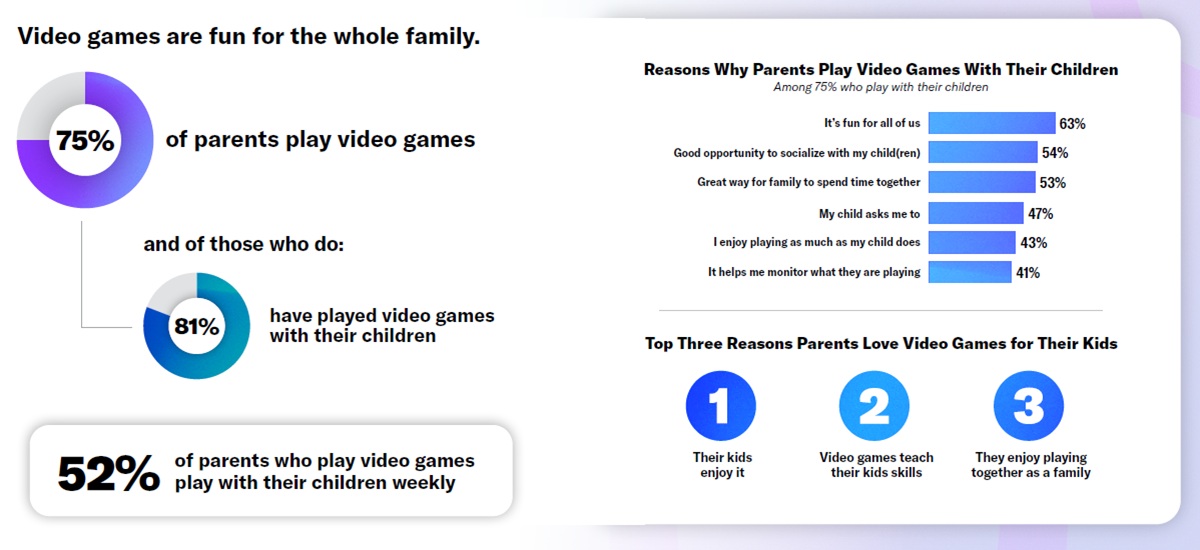
About family playing, 75% of parents play video games weekly, and 81% of those report enjoying games with their children. Half of parents allow their children to play games for skill development. About 40% do so to encourage social play or because they enjoy playing together. Parents reported that games account for a quarter of their children’s weekly screen time. Most prefer their children to spend time on video games rather than social media.
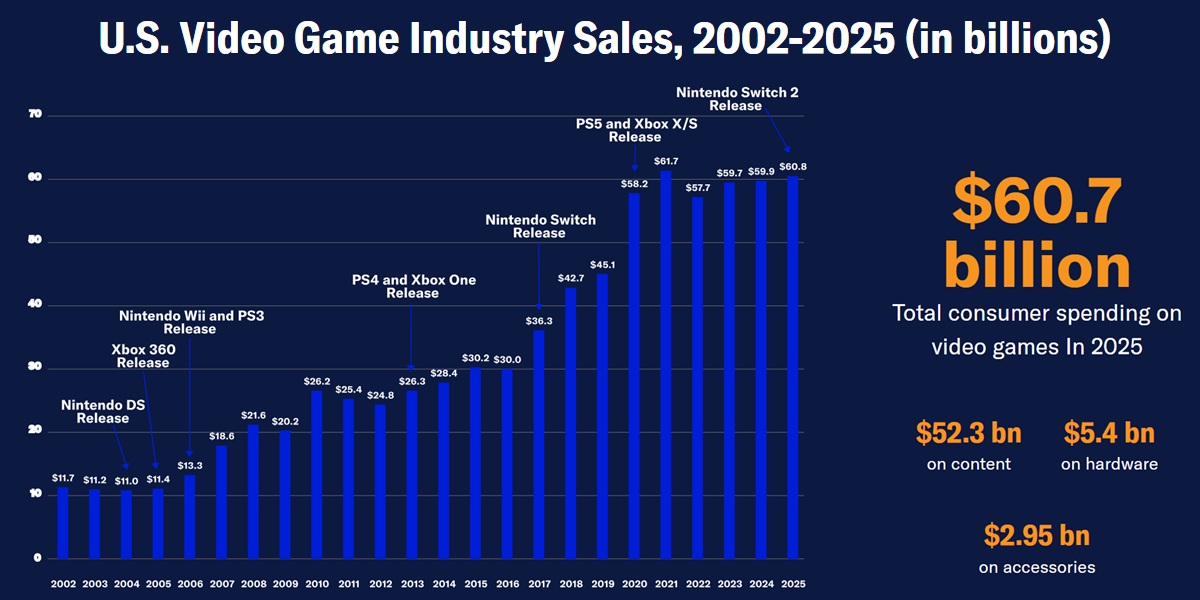
Moreover, in the past year, 58% of players downloaded a free game, while 43% purchased a game. Price and gameplay are the top factors when players choose a game, followed by story, genre, graphics, and single-player availability. Most younger players -Alpha (69%), Gen Z (78%), and Millennials (67%)- have purchased in-game content, spending an average of USD 20 monthly. A majority of players (63%) report that video games deliver the most entertainment value for their money, compared to video streaming services for music, TV and movies, as well as books, magazines and news articles. Puzzle, primarily driven by older players, is the top genre on mobile (66%) and PC (60%) but falls behind action (66%), shooter (60%) and arcade (60%) games on console.
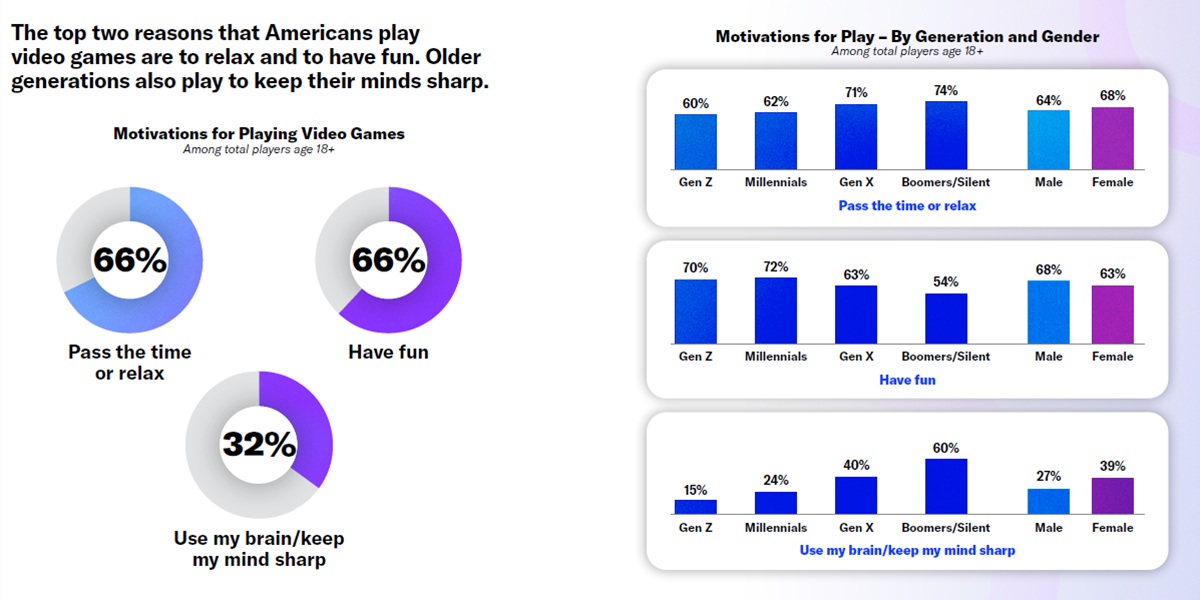
Among adults surveyed, 85% cited fun, 79% mental stimulation, and 78% stress relief as benefits of gaming. Younger generations value games for bringing people together (88%) and building relationships (87%). Most adults agreed that video games help develop problem-solving skills (76%), teamwork and collaboration (67%), adaptability and resilience (58%), STEM skills (53%), and communication skills (52%). Nearly 90% of players who participate in a sport both virtually and in real life say playing the game improves their real-world performance.
ECONOMIC IMPACT
The U.S. video game industry creates and supports more than 250,000 jobs across the country, while generating USD 95.8 billion in total economic impact. Additionally, the industry contributed more than USD 65 billion to the U.S. GDP in 2025.
This sector is highly concentrated in a handful of states. California is home to over 36,000 jobs, accounting for 44% of industry employment. Washington, Texas, New York, and Florida round out the top five states, accounting for 74% of the industry’s employment. Additionally, the industry employs workers that collaborate remotely from home or other locations without a defined corporate office site, while an emerging set of companies operate fully remote, with the entire force working off site connected with just a basic mailing address. In 2025, these remote and fully remote workers accounted for 14,461 jobs, or 17% of total U.S. video game industry employment.
A POWERFUL CULTURAL FORCE
Stanley Pierre-Louis, president and CEO at ESA, stated: “Video games play an integral role in American life today, with a large majority of Americans now playing regularly. They have become a powerful cultural force, while providing mental stimulation, stress relief, and meaningful social connection for people of all ages.”
He also explained: “The playing experience on console and PC is still very, very meaningful to core gamers because of the ability to play with others, to connect and also the experience you can have on these machines, which are just so innovative and technologically powerful. Our study demonstrates that games continue to be the most popular and successful form of entertainment that this country produces.”