








By Tatiana Martins, journalist at G&M News.
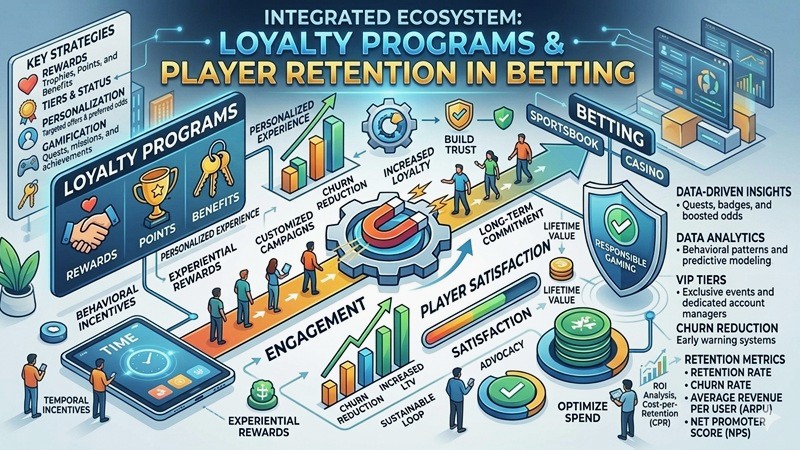
The era of the USD 500 welcome bonus is ending. In 2026, the real war for bettors is happening in the rewards program. Operators across the U.S., Canada, and Europe are shifting their spending from acquisition to retention, turning VIP tiers, cashback offers, gamified missions, and personalized rewards into the main engine of long-term growth. As marketing costs rise, taxes increase and regulatory pressure tightens, loyalty is a survival strategy.
The shift from acquisition to retention
For years, the betting industry was built on acquisition. Operators spent money on paid media, affiliate deals, and aggressive welcome bonuses to capture new customers. The logic was simple: deposit more, bet more, grow faster.
That model is showing its limits. In mature markets like New Jersey, Pennsylvania, Ontario and the UK, customer acquisition costs have surged, and the number of new eligible bettors is flattening. At the same time, regulators are limiting how bonuses can be marketed, and tax hikes are squeezing margins.
The result is a strategic pivot. Operators are now investing in loyalty programs that keep players engaged for months and years, rather than just chasing one-time deposits. The goal is no longer just to acquire. It’s to retain, cross-sell, and maximize lifetime value (LTV).
How loyalty programs work in 2026
Modern loyalty programs in gaming are more sophisticated than simple point-for-cash systems. They typically include:
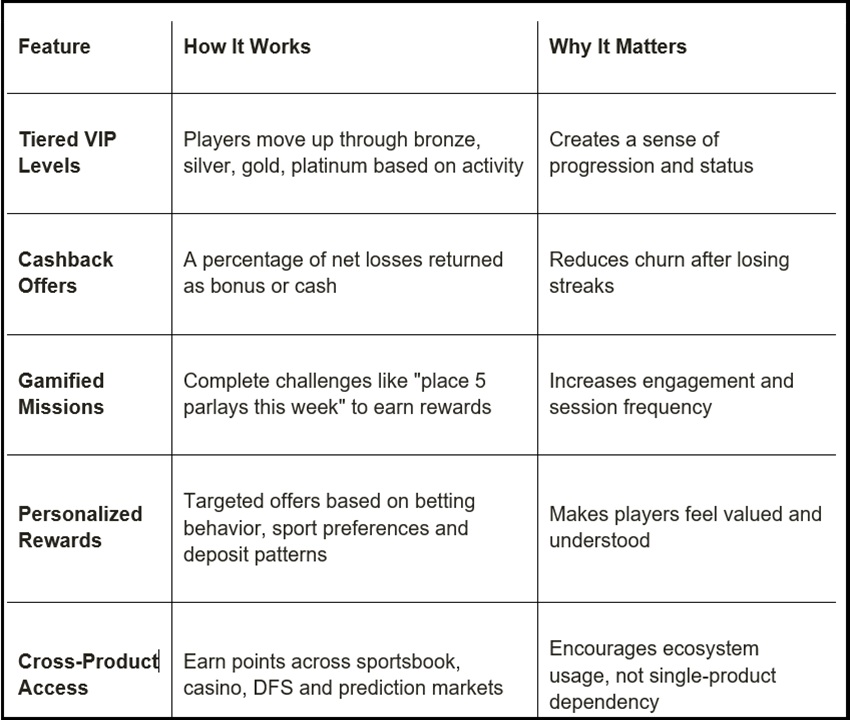
The most advanced programs now use AI to predict when a player is at risk of churning and automatically trigger personalized retention offers before they cancel notifications or stop logging in.
Why operators are betting on loyalty
The business case for loyalty is straightforward. Retaining an existing customer is significantly cheaper than acquiring a new one. In many cases, it costs 5 to 10 times less to keep a player than to find a new depositor.
However, the benefits go beyond cost. Loyalty programs also:
- Increase lifetime value by extending how long a player stays active
- Reduce sensitivity to bonuses by creating emotional attachment to the brand
- Improve data quality by tracking behavior across multiple touchpoints
- Build brand differentiation in a market where odds and markets are increasingly similar
- Support responsible gaming by rewarding consistent, controlled behavior rather than high-risk activity
The operator strategy is clear: the bettor who is already deposited into a sportsbook is the same bettor who wants to play slots between innings, hedge a parlay on a prediction market, and run a sports-themed casino game when nothing’s live. Whoever owns that whole stack owns the customer.
Competition is fierce
The loyalty arms race is already underway. Major operators are differentiating themselves through creative programs:
- DraftKings has built a massive ecosystem with DK Replay, DK Casino, and DFS, all tied together through a unified rewards structure that encourages cross-product usage;
- FanDuel competes on brand recognition and seamless integration with its parent company Flutter’s global network;
- BetMGM leverages its MGM Resorts partnership to offer real-world perks like hotel stays and show tickets;
- Caesars Rewards brings decades of casino loyalty experience into the digital betting space;
- Smaller operators are using niche loyalty models to compete, offering better cashback rates, faster payouts or exclusive access to events.
Operators that win will be the ones that can make loyalty feel personal. Players need to sense like the brand knows them: what sports they bet on, what times they’re active, what kind of rewards they actually want.
The risk of over-reliance
There’s a flip side to this strategy. If loyalty becomes the main retention tool, operators face new risks:
- Program fatigue: too many players may feel overwhelmed by tier thresholds and complex rules;
- Margin pressure: generous cashback and rewards eat into already compressed margins;
- Regulatory scrutiny: some jurisdictions may view loyalty offers as promotional bonuses;
- Data dependency: if AI models fail to predict churn accurately, retention spending becomes inefficient.
The key is balance. Loyalty should complement, not replace, other aspects of the business: product quality, odds competitiveness, customer support and responsible gaming.
What does this mean for the industry
The shift to loyalty-based retention is a sign of industry maturity. It shows that operators are moving from the growth-at-all-cost phase to the sustainable, efficient growth phase.
For the industry, that is a positive development. It means:
- More stable revenue from a core base of loyal players;
- More innovation in how rewards are designed and delivered;
- More focus on long-term value rather than short-term deposit spikes;
- Better player experience as operators invest in understanding customer needs.
Companies that realize how to build loyalty programs intelligently will be the best positioned for next phase of expansion. They’ll be less dependent on volatile acquisition markets, more resilient to regulatory changes, and better able to serve players across multiple jurisdictions.
The bottom line
Loyalty programs are becoming the main retention strategy for betting operators, especially in mature markets where growth is harder to come by.
As acquisition costs rise and regulation tightens, operators that can keep players engaged for months and years will be the ones that survive and thrive. The question is which operators can build the most effective, sustainable and player-friendly programs.
In 2026, winners won’t be the ones with the biggest welcome bonus. They’ll be the ones with the best loyalty program.