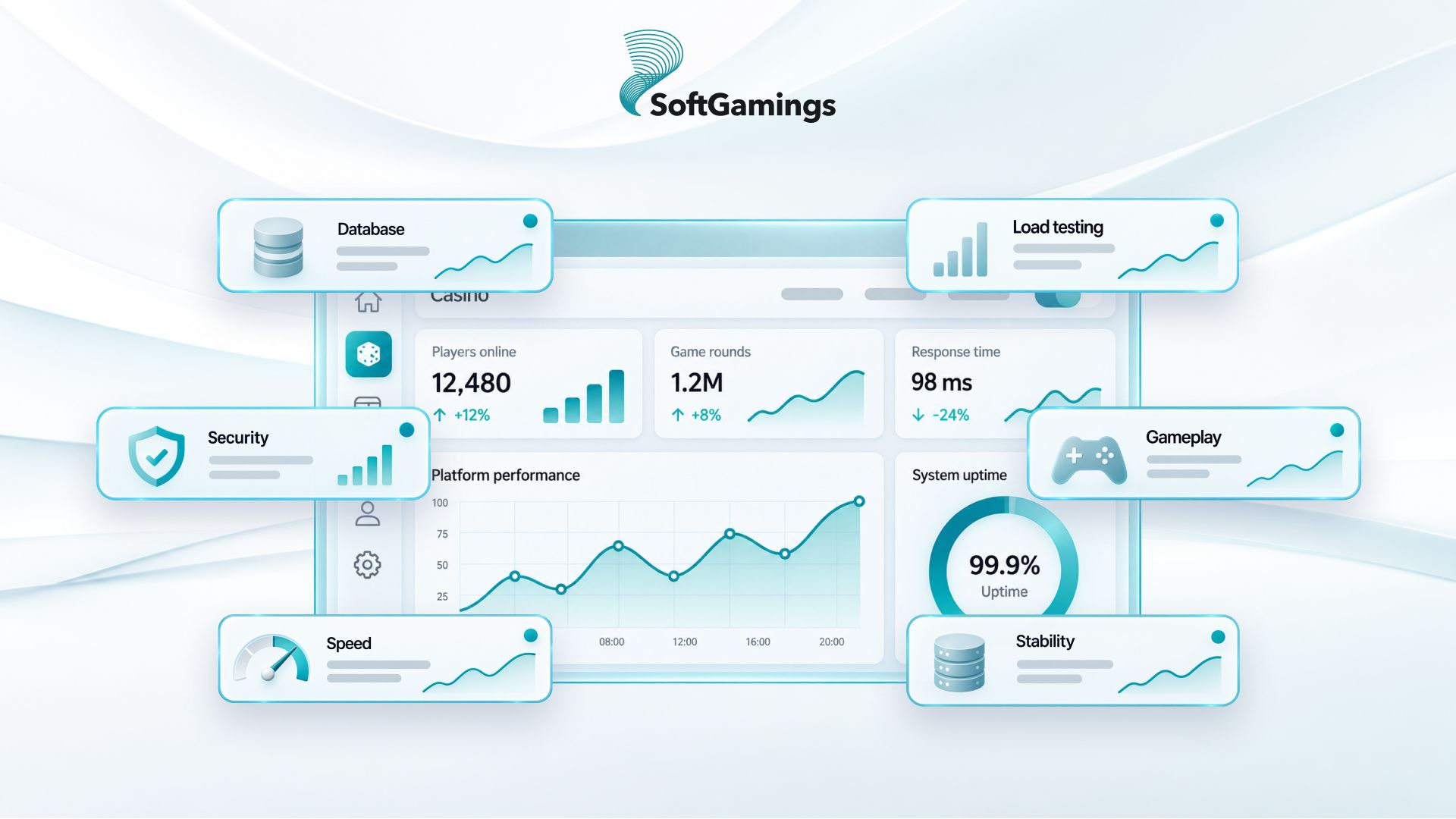
Platform performance needs to be assessed across the entire player journey, not just in a polished demo. With 19 years of industry experience, SoftGamings’ team develops online casino software for operators and offers an iGaming platform integrating more than 300 game providers and over 40,000 games. That established technology base makes the company a credible long-term partner, while operators should still test how the platform handles game launches, payments and operational issues in real conditions.
Test the platform from a player’s perspective
Start with a practical scenario: a new customer opens the site on a mid-range phone, registers, completes any required verification, deposits and launches a game. Record the time and result at every step. Repeat on a weak mobile connection and after switching between games from different studios.
A software supplier should explain what the loading indicator represents. Is the platform waiting for an account response, a game-provider connection or a completed wallet check? Operators need a way to distinguish slow content delivery from a stalled financial transaction. An attractive animation does not solve a broken integration.
Understand which launch model fits the team
The operating model affects who owns technical work before and after launch. A company evaluating an online casino turnkey approach can obtain a prepared technology foundation and connected operational tools instead of developing every core component itself. A turnkey casino solution may reduce the initial development and integration burden, but the operator still needs clear responsibilities for configuration, licensing, third-party agreements and ongoing support.
Ask the provider to demonstrate how a new game studio, payment method or compliance service would actually be added. Which changes can the operator make in the back office? Which require a support ticket or a separate supplier? Request implementation steps and realistic dependencies, not a generic promise of rapid deployment.
Follow the money through a failed game session
The most revealing test is sometimes a failure. Suppose a player starts a slot, the internet connection drops and the lobby shows an outdated balance. The operator must know whether the wager was accepted, whether a result exists and how the correct balance is restored.
Run this scenario with a technical representative. Establish which system holds the transaction record, what happens when the game supplier is unavailable and how staff can trace a disputed round. Check whether support teams can view a clear history without relying on screenshots from the player. Reliable reconciliation matters more than making a loading screen disappear one second sooner.
Measure performance across providers and markets
A casino rarely uses a single game studio or serves one type of connection. Operators should test several suppliers, devices and locations that reflect planned markets. A platform makes testing and troubleshooting easier by providing a single managed integration point for hundreds of game providers.
Ask for reporting that separates game-launch failures, session interruptions, payment errors and general website performance. Define thresholds for investigation and request an example of an incident report. If measurements are available only as a single sitewide average, important problems may remain hidden in individual markets or game categories.
Check operational controls before signing
Performance problems become business problems when teams cannot respond. During a vendor demonstration, ask an operator-level user to disable an unavailable game, inspect a failed deposit, review customer account activity and locate an incident affecting one provider. These are practical tasks, not theoretical features.
Responsible gambling and security controls must also remain consistent when players move among content providers. Confirm who enforces account restrictions, how unusual transaction patterns are reviewed and whether the operator can retrieve the records necessary for compliance and customer support. Requirements will vary by jurisdiction; they should be validated for the intended market.
Evaluate platform costs beyond launch
A platform proposal should identify the cost of initial setup, recurring services, integrations, supplier-related charges and support. Operators should ask what happens commercially if they replace a payment partner or expand the game catalog. They should also establish the contractually agreed process for responding to incidents outside business hours.
“A platform demonstration should show the ideal customer journey alongside examples of what can go wrong,” says Vigants Lesausks, CSO of SoftGamings. “Operators need to know how problems are identified, who resolves them and what information their teams will have when a player asks for help.”
Before making a decision, request a trial environment and document the results of a small set of repeatable tests. Record the device, network, game provider, expected result and actual outcome. That evidence gives commercial and technical teams a shared basis for comparing casino platform suppliers. Smooth gameplay is valuable, but transparent incident handling and dependable day-to-day controls are what allow an operator to maintain it.