


See more of G&M News on Google
Add as a preferred source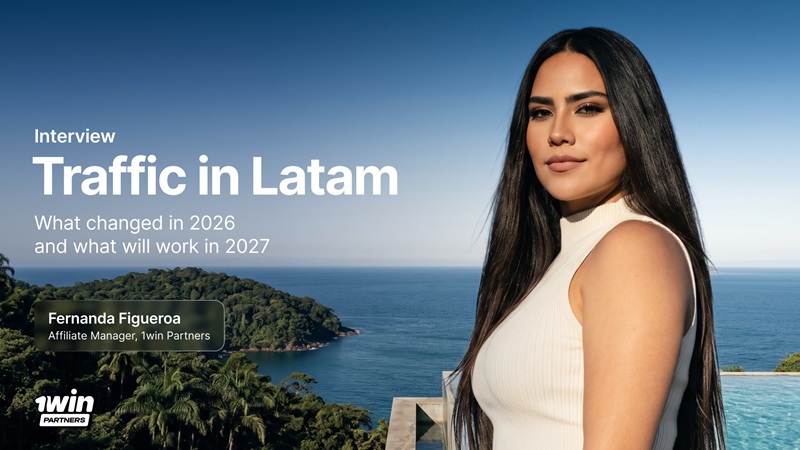
By Diana Guerrero, journalist at G&M News.
Throughout 2026, approaches to user acquisition and marketing continued to evolve across Latin America’s iGaming market. What would you highlight as the main changes in traffic dynamics across the region, and what drove them?
Without a doubt, the World Cup was the biggest event for the LatAm iGaming industry this year. During the tournament, the number of FTDs in the region was approximately three times the usual level. The peak came during the round of 16, while the final produced the second-largest spike. The second notable change was the role of streamers in user acquisition. Casino streams became a full-fledged traffic source for affiliates rather than just a brand awareness tool. Viewers watch the game in real time, ask questions in the chat, and register during the broadcast, so the path from interest to first deposit is very short. The platforms themselves are maturing too: according to Streams Charts, total hours watched on Kick grew by about 31% in the third quarter. For affiliates, this means streaming is becoming a channel that can be planned and measured like any other.
Affiliates work with various acquisition sources, including SEO, social media, influencers, communities, and paid advertising. Which channels delivered the most consistent results in 2026, and what makes them effective in markets such as Mexico?
In terms of traffic sources and their stability, Mexico is quite similar to the rest of LatAm, but it has its own specifics. When it comes to SEO and ASO, sports-related searches lead the way, with football and Formula 1 ranking ahead of branded queries. Interest was further boosted by the 2026 World Cup and Sergio Perez’s return to F1. PPC is a different story. Affiliates rarely use this channel, which allows offerwalls to cover a large number of keywords and remain effective for longer. On Facebook, classic approaches still work very well: branded bonus offers and creatives featuring popular slots, including those linked to well-known personalities. Timing also matters, as peak activity and most first deposits happen between 6 p.m. and midnight. TikTok has almost caught up with Facebook in terms of ad reach, making it a strong standalone acquisition channel. UAC also performs well for sports, but only with proper targeting across the UAC search segment and YouTube. Otherwise, traffic becomes too expensive, and player quality tends to be low.
Beyond traffic volume, user quality has become a determining factor in campaign performance. Which metrics should affiliates prioritize when assessing the quality and real value of acquired players? How can they balance volume growth with long-term profitability?
First of all, I would look at the cost per FTD, the share of players who make repeat deposits, and the revenue generated by acquired users over several months. When working on a CPA basis, you need to consider how many acquired players meet the payout requirements. With RevShare, it can take several months to assess the revenue from a single cohort, as it depends on how long players continue playing and how active they remain. It is better to scale gradually, comparing new player cohorts with previous ones over the same length of time. If acquisition costs are rising while revenue per player is falling, it is worth understanding the reasons first rather than rushing to increase the budget.
Latin American markets differ in maturity, regulation, consumer habits, and competition. How viable is it to use the same traffic acquisition strategy across different countries, and which elements should affiliates adapt to each market?
Of course, a successful campaign setup can serve as the basis for a test in another country. But I would not expect the same acquisition costs and conversion rates. Even a shared language does not mean audiences will respond to an offer in the same way. First, it is worth reviewing the offer itself and the creatives. For sports betting, that means local tournaments, teams, and match schedules. For casino, it means games and slots that appeal to the audience in that particular country. For search, you need to carry out keyword research again, and when working with influencers, you should always check which countries their followers live in. I would also check the journey to making a deposit. The currency, available payment methods, and minimum deposit amount can have an even greater impact on results than the creative. You need to account for local advertising requirements and platform policies in each country.
Which trends, channels, or acquisition models do you believe will have the greatest potential in Latin America in 2027? What concrete recommendations would you give to the affiliates who are planning their budgets and strategies for next year?
In 2027, I would pay particular attention to Mexico. The market is growing, and with the restrictions on betting advertising in Brazil, we could see more brands and advertising budgets moving into Mexico. That’s why I would start testing visual ad creatives on Facebook and TikTok now, before competition increases. At the same time, I would invest in building SEO and ASO assets around football, Liga MX, and Formula 1. As more brands enter the market, these assets will become more valuable. I would keep most of the budget focused on campaigns that are already profitable and set aside a portion for testing. At 1win Partners, we support affiliates with these tests by offering test caps with no KPI requirements, as well as ready-to-use PWAs, landing pages, and creatives tailored to different GEOs and traffic sources.
Last week, you participated at G&M Events Mexico 2026. What is your analysis on the conference, and what are your main takeaways?
G&M Events Mexico 2026 was a great opportunity to connect with industry professionals and discuss how the LatAm iGaming market is evolving. Mexico is becoming a key meeting point for the region, making events like this particularly valuable. I was especially interested in the discussions around SEO, regulation, AI, and automation. One of my main takeaways was the importance of connecting different digital channels rather than treating them separately. For affiliates, this means looking at how search, social media, and other touchpoints work together throughout the user journey. AI and automation can make these processes more efficient, but understanding user behavior remains essential. Overall, the event offered valuable perspectives on the challenges and opportunities shaping the industry in Latin America.