








By Diana Guerrero, journalist at G&M News.
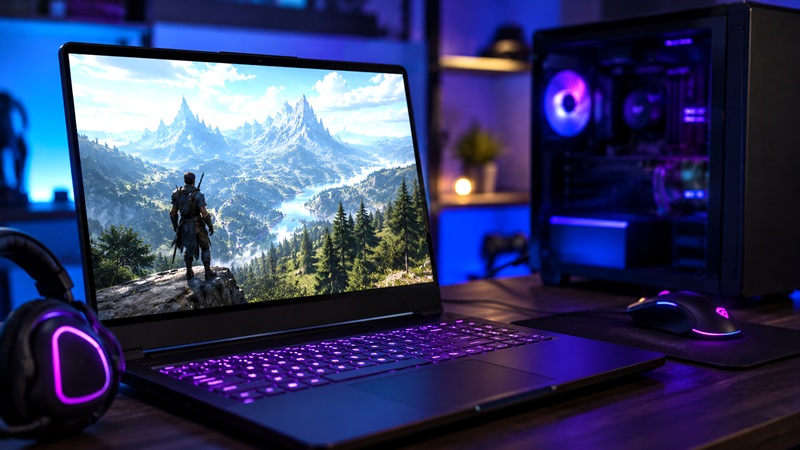
It is clear that the evolution of technology demonstrates that PC video games are at a turning point in the United States, Canada, and Europe. What was once considered a luxury reserved for gamers with high-performance equipment has now become a much more accessible experience thanks to the democratization of hardware and the evolution of open-world titles. This combination is redefining the way millions of users engage with digital entertainment, ushering in a new era where exploration, expansive storytelling, and technological immersion take center stage.
The drop in prices for key components such as graphics cards and processors has allowed more gamers to enjoy high-quality experiences. Major brands have launched “entry-level” lines with competitive performance, driving the penetration of PC gaming in markets where consoles previously dominated.
A few examples are the following: graphics cards with ray tracing support at lower prices; processors optimized for multitasking and streaming, and affordable peripherals that enhance the experience without significantly increasing the cost.
This more widespread access to hardware has allowed PC to establish itself as a competitive platform against consoles, especially in the United States, where Esports and streaming have gained ground.
MORE CREATIVE AND EXPERIMENTAL OPEN-WORLD GAMES
Likewise, open-world titles have become the flagship genre of PC gaming. The freedom to explore, expansive storytelling, and the integration of artificial intelligence to create dynamic environments have raised industry standards. In terms of titles, Elden Ring set a global benchmark with its open and challenging design; Starfield took space exploration to new dimensions, and Cyberpunk 2077 revitalized its offering with expansions and technical improvements.
In Canada, indie studios have taken advantage of the accessibility of hardware to innovate with more creative and experimental open-world games. Europe, for its part, continues its tradition of RPGs and narrative-driven adventures, finding in the PC the ideal ecosystem for expanding complex stories and immersive universes.
However, the growth of PC gaming also faces different challenges:
- Title Saturation: An excess of open-world games can lead to player fatigue. The boom in open-world games has created an unprecedented supply in the market, but also a risk of saturation. Every year, dozens of titles are released that promise expansive experiences and immersive narratives, which can lead to player fatigue. Repetitive mechanics and a lack of differentiation among titles threaten to dilute the genre’s appeal, forcing developers to seek innovative approaches to maintain the attention of an increasingly demanding audience.
- Technical Issues: Although hardware has become more accessible, open-world games continue to require high-end configurations to reach their full graphical and narrative potential. Players with mid-range systems can enjoy these experiences, but they often have to sacrifice visual quality or performance. This challenge creates a constant tension between democratizing access and maintaining high technical standards, a balance that the industry has yet to fully resolve.
- Global Competition: International competition adds another layer of pressure. Asia (especially markets like China, South Korea, and Japan) continues to set the trend in innovation and the volume of game releases. Its ability to produce massive, technologically advanced titles puts the United States, Canada, and Europe in a constant race to stay relevant. The response from these markets has been to focus on narrative creativity and cultural diversity, but the challenge of matching Asia’s pace in production and reach remains one of the major challenges facing PC gaming.
In conclusion, PC video gaming is redefining the industry thanks to technological accessibility and the appeal of open worlds. The United States, Canada, and Europe lead not only in revenue but also in creativity and in crafting experiences that place the player at the center of the narrative. The democratization of hardware and developers’ ambition have ushered in a new era where immersion and exploration are the true differentiators.