








Why a Plan Changes the Experience
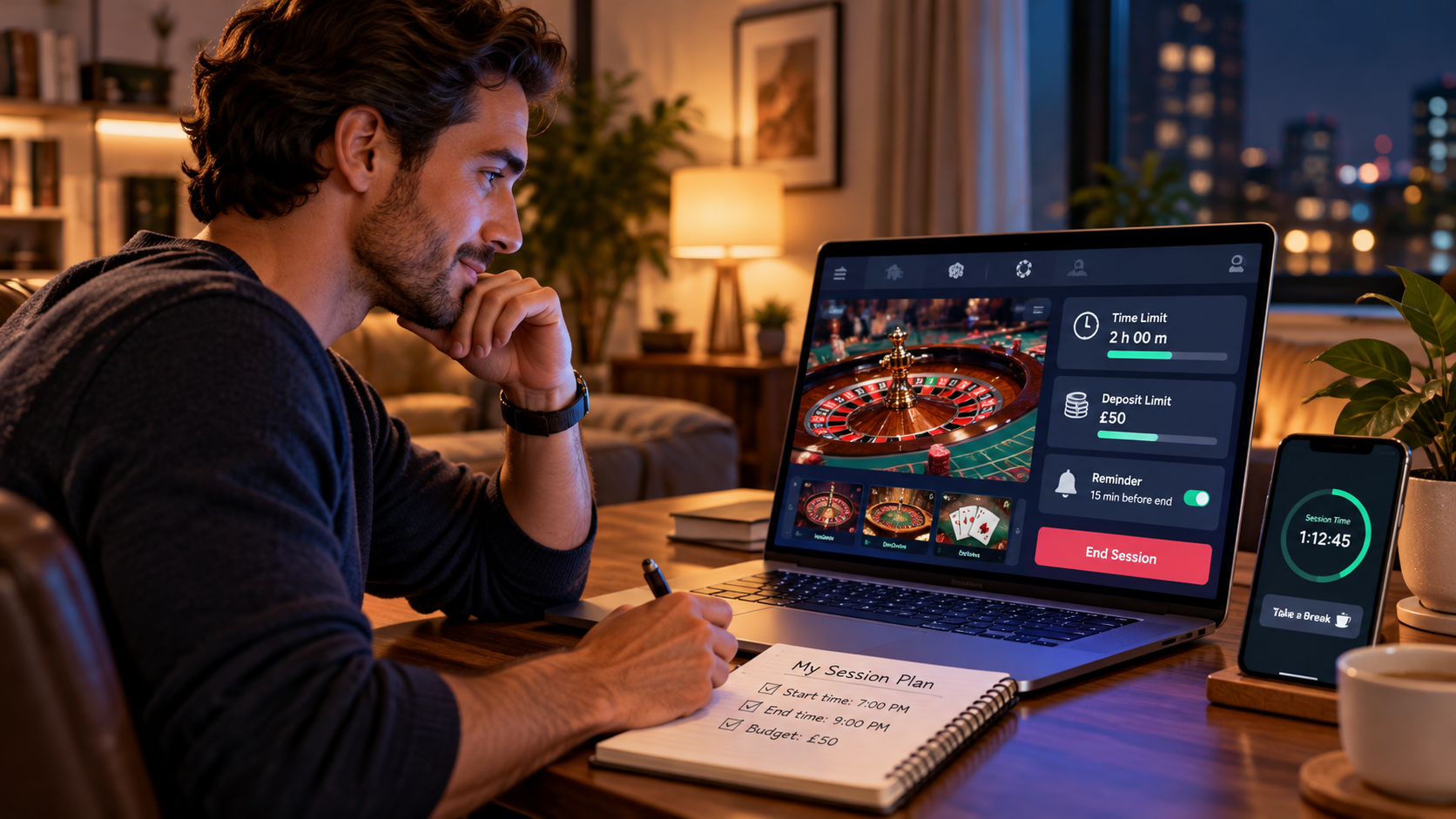
A session plan is not a prediction of results, but a set of boundaries established before the game begins. Setting a time limit, a spending limit, and a clear stopping point gives players something to work from even when a game becomes absorbing.
Set the Boundaries Before Logging In
Planning is more effective when decisions are made before a win or loss influences expectations. For platforms such as LuckyDays casino, session reminders, account limits, and transaction history should be easy to find, although no product can guarantee a particular outcome.
Build a Session Around Practical Limits
A useful plan should be specific enough to guide behaviour but simple enough to remember, taking the rest of the day into account rather than treating gaming time in isolation.
- Choose a start time and an end time, with a reminder to stop.
- Set a spending limit using only money allocated for entertainment.
- Decide in advance not to raise the limit to recover losses.
- Keep work, sleep, family time, and other commitments outside the planned session.
- Take a break if concentration narrows or decisions start to feel rushed.
Time Awareness Is a Product Design Issue
People do not always notice how quickly time passes during repetitive or interactive activities, especially when new information keeps appearing on screen. Well designed interfaces make elapsed time, session reminders, and account controls easy to access instead of hiding them several screens away.
Reminders Should Be Clear, Not Disruptive
A useful reminder shows how long a session has lasted and gives the player a straightforward way to pause or leave. Notifications that arrive too late, use vague wording, or require several extra taps may be ineffective when players need them most.
Look Beyond the Interface
A player’s experience depends on more than screen usability, since trust also comes from payment clarity, accessible support, account settings, and consistent information across channels. The Nielsen Norman Group explains the difference between user experience and customer experience, highlighting the distinction between using a particular interface and dealing with a service as a whole.
| Planning element | What it supports | What to check |
| Session timer | Awareness of elapsed time | Whether it is visible and easy to understand |
| Deposit limit | A preset financial boundary | Whether the setting and its terms are clear |
| Reality reminder | A pause to reconsider continued play | Whether the player can respond easily |
| Account history | Access to previous transactions and activity | Whether records are easy to find |
| Support access | Help when a problem arises | Whether contact details are clearly displayed |
When a Planned Session Needs to End Early
A planned end time should be a boundary rather than a target that must be reached, and stopping early is a perfectly valid choice. If gambling starts affecting sleep, finances, relationships, or other responsibilities, stepping away and seeking appropriate support becomes more important than finishing the session.
Recognise the Pressure to Continue
Repeatedly extending a session, increasing spending limits after losses, or feeling unable to stop may indicate that existing boundaries are no longer working. Taking a longer break, using available blocking or self-exclusion tools, and contacting a support service can be more helpful than simply setting stricter limits for the next session.
How Operators Can Support Better Planning
Responsible design makes protective tools available before they are needed, explains their effects in plain language, and avoids treating longer sessions as a sign of success. Operators can check whether reminders are noticed, limits are straightforward to manage, and players can reach support without navigating promotional messages first.
Conclusion
Thoughtful session planning starts with boundaries set before play and maintained throughout the session. A well designed experience makes it easy to stop, keeps account controls accessible, and helps entertainment remain within its intended place in the day.