








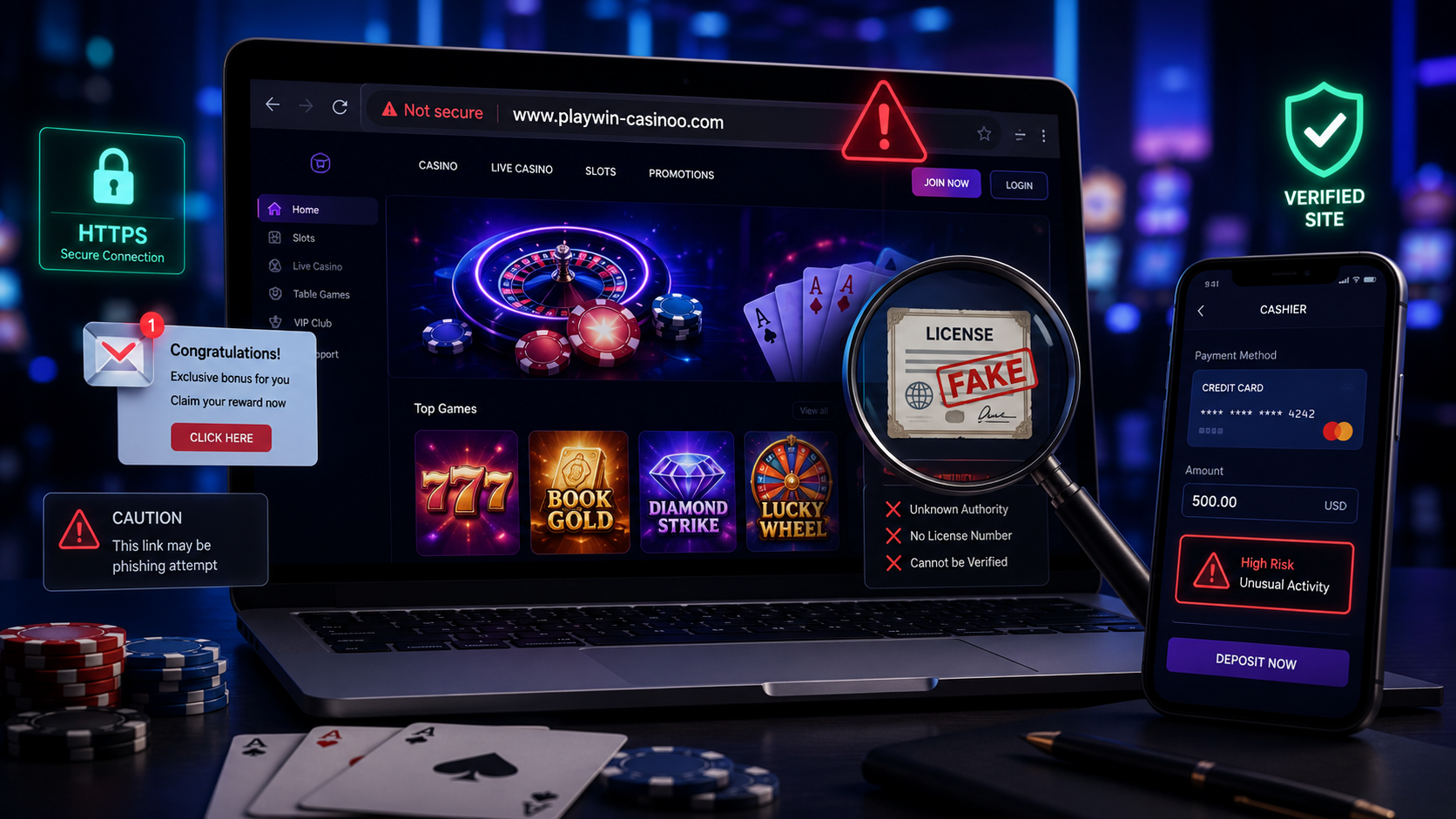
The Web Address
Most people look at how a site looks before they check where it actually is. Flip that habit. Before you even register, hover over the URL or tap and hold it on mobile. Look closely.
Scammers love near-matches. Something like “roya1casino.com” instead of “royalcasino.com.” A missing letter, an extra hyphen, a “.net” swapped in where you’d expect “.com.” These tiny tweaks are designed to slip past a tired brain scrolling through a phone at midnight.
If you’re trying to figure out whether a gambling platform is legitimate, checking independently reviewed lists can save you a headache. Sites like https://www.kasinonetti.com/ compile vetted operators, so you’re not left guessing which URL is the real one and which is fake.
Also check for “https” and the little padlock icon. It’s not a guarantee of legitimacy on its own; scammers can get certificates too, unfortunately, but its absence is a giant red flag. No padlock, no trust, full stop.
The Payment Page
Scammers can’t fully disguise the payment flow, no matter how good their design team is. Legitimate casinos partner with recognizable processors- Visa, Mastercard, well-known e-wallets, sometimes crypto gateways with actual verification steps.
Fake sites often push you toward odd payment routes. Direct bank transfers to a personal account. Gift cards. Some obscure crypto wallet with no explanation of how withdrawals work. If a casino asks you to wire money like you’re buying a used car from a stranger, that’s not a casino. That’s a trap wearing a casino costume.
Pay attention, too, to how withdrawal terms are worded. Real platforms explain wagering requirements clearly, even if the fine print is long and annoying. Fake ones are vague on purpose. “Withdrawals processed within a reasonable timeframe” isn’t a policy.
Fake Licensing Claims
Many casinos carefully choose the right gambling license. Malta, Curaçao, or the UK Gambling Commission. But, that part’s easy to fake. Anyone can paste a badge image at the bottom of a page.
What’s harder to fake is the paper trail behind it. Genuine operators list a license number, and that number should be clickable or at least searchable on the regulator’s own website. If you copy the number and the regulator’s database shows nothing, or shows a completely different company name, walk away.
Phishing Emails
The fake website is only half the scam. What comes in your inbox is arguably the more dangerous because it feels personal.
Phishing scams pose as well-known or even previously utilized casinos. An urgent subject line can include, “Your account will be suspended,” or “Claim your bonus before it expires tonight.” Scammers are aware that fear causes you to click more quickly.
A few things give these away once you slow down for five seconds:
- The sender address rarely matches the company name exactly. It might be close, [email protected] instead of the actual domain. Real companies don’t need a second, weirdly specific domain just for security matters.
- The greeting is generic. “Dear Valued Customer” instead of your actual name. Legitimate platforms that have your account details usually use them.
- There’s always urgency. A threat of losing funds, a countdown timer embedded right in the email graphic.
- If you hover over the link without clicking, it almost never matches the domain it claims to be from. This one trick alone catches probably 80% of phishing attempts if people would just bother to check it.
A Few Habits Worth Building
None of this requires becoming a cybersecurity expert. It just requires slowing down slightly before you type in card details or click a flashy bonus link.
Bookmark the actual sites you trust instead of searching for them fresh each time. Search results can include paid ads that lead straight to fake sites.
Use a separate email for gambling sign-ups so if something goes wrong, the damage stays contained.
Turn on two-factor authentication when offered.
If a deal feels too good, it usually is. A 500% deposit bonus with no strings attached isn’t marketing brilliance. It’s bait.
Trust Your Gut
There’s a strange thing that happens with well-made scam sites: something feels slightly off even when you can’t immediately say what. That instinct could be right. Check reviews. If a site has been operating for any real length of time and it’s legitimate, there will be a scattered trail of genuine user experiences, good and bad. Fake sites tend to have either nothing at all, since they’re brand new, or a suspiciously uniform pile of five-star praise with no complaints whatsoever. Real businesses have complaints.