








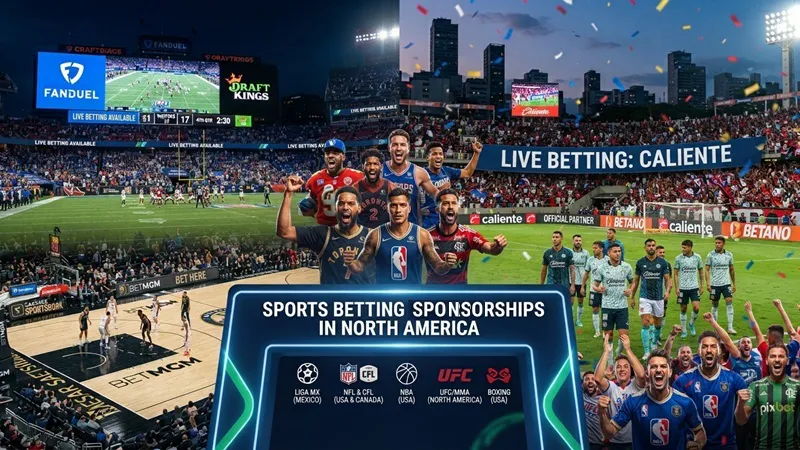
Recently, intelligence platform GlobalData report, “Sponsorship Sector Report – Gambling & Betting – Americas 2026.” Among other key data, the study shows that gambling and betting brand spending has risen sharply since 2020, with annual deal value up 145% from 2020 to 2025 and deal volume up 106.6%.
The largest jump occurred between 2020 and 2021, followed by steadier, more incremental growth through 2025, which reflects a shift from an early legalization-driven land grab to a more mature market focused on renewals, more selective rights buying, and fewer readily available opportunities as major properties become locked up.
Across the Americas, sports sponsorship is increasingly dominated by a few big, regulated North American betting brands, such as DraftKings, FanDuel, and BetMGM. This is driven by expanding US/Canada legalization and intense competition for customers, which favors well-funded sportsbook/casino companies, while Latin America is led by a handful of big spenders like Betano and Superbet, and Mexico stands out with strong local players like Caliente.
Olivia Snooks, Sport Analyst at GlobalData, commented: “Soccer’s rising deal values reflect sportsbooks across the Americas increasingly using the sport to attract customers across borders, particularly in the US, Mexico, and key Latin American markets. Its year-round schedule, recurring global tournaments, and strong digital and social-media engagement enable betting operators to expand marketing investment rapidly as regulated markets and media distribution networks continue to grow.”
Snooks continued: “In terms of brand growth, this is concentrated in smaller brands scaling quickly, for example Ontario Lottery and Gaming Corporation. Sponsorship is the fastest path to awareness and credibility in newly competitive markets. Major sportsbooks like DraftKings are slowing as they prioritize profitability. They are cutting harder-to-measure sponsorship and shifting to more trackable marketing.”
North America is the main hub for sponsorship in the Americas. This reflects its larger regulated market, stronger sports business infrastructure, and operators’ ability to fund bigger, long-term marketing across major leagues and media. High-profile NFL partnerships in the US are also expanding that influence into South America, helped by the league hosting games in Brazil. South and Central America shows a more concentrated sponsorship pattern, where operators prioritize fewer, higher-impact properties, especially elite soccer assets.
In this sense, Snooks concluded: “The sponsorship strategy in North America skews toward high volume, which is driven by intense competition among operators and the fragmentation of rights across teams, leagues, venues, media, and affiliate ecosystems, encouraging many parallel partnerships to maintain always-on visibility and customer acquisition.”