








By Tatiana Martins, journalist at G&M News.
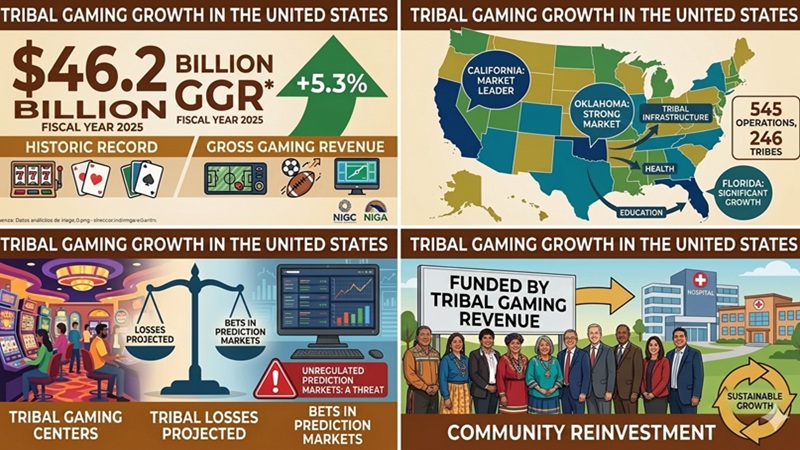
Native American tribes have become one of the most powerful forces in the U.S. casino industry, with tribal gaming reaching record levels in recent years. In fiscal year 2025, tribal gaming operations generated nearly USD 46.2 billion in gross gaming revenue, up 5.3% from the previous year. That growth builds on the USD 43.9 billion recorded in fiscal year 2024, when 532 tribal casinos owned by 243 federally recognized tribes across 29 states set another all-time high.
What makes this sector important is its role in tribal sovereignty and economic self-determination. Tribal gaming now generates more than 42% of all annual gaming revenue in the United States, making it a central pillar of the national gambling economy as well as a major source of funding for tribal governments and local communities.
From bingo halls to a national force
Since the passage of the Indian Gaming Regulatory Act, or IGRA, in 1988, tribal gaming has grown from small bingo halls into a nationwide network of casinos, resorts and entertainment destinations. That legal framework created the basis for tribes to operate gaming on sovereign land, while also establishing a regulatory structure that distinguishes tribal gaming from commercial casinos.
The scale of that transformation is striking. Industry figures show that more than 250 tribes operate over 500 tribal casinos or gaming locations across the country. Even allowing for source and reporting-period differences, the overall picture is clear: tribal gaming is vast, deeply embedded in the U.S. gaming landscape and still growing.
A business of major scale
The revenue figures show just how significant tribal casinos have become. The latest fiscal-year data put tribal gross gaming revenue at USD 46.2 billion, showing continued momentum and another record year.
That growth has not been evenly distributed. Approximately 9% of tribal casinos, those generating over USD 250 million annually, account for more than half of the sector’s total revenue. At the other end of the scale, more than half of tribal casinos generated less than USD 25 million each and together represented only around 5% of total sector revenue. In other words, tribal gaming is both expansive and highly concentrated, with a relatively small number of flagship properties driving much of the industry’s financial weight.
Regional powerhouses
California remains the dominant tribal gaming market in the United States. Tribal casinos in California generated approximately USD 12.6 billion in recent fiscal year data. The East and Southeast regions, which include states such as New York, Connecticut, North Carolina, Florida, Alabama, Mississippi and Louisiana, ranked second at around USD 11.2 billion.
Other regions also play an important role. The Portland region, covering Oregon, Washington, Idaho and Alaska, reached nearly USD 5 billion, while the Midwest region climbed to over USD 5 billion. Tribal casinos in Kansas, Oklahoma and Texas collectively generated about USD 7 billion. These figures highlight a broad national footprint rather than a niche or localized business.
Why it matters beyond gaming
Tribal casinos are not simply profit centers. Industry data shows that tribal gaming supports more than 676,000 jobs and has a tax impact and tribal revenue share of over USD 15 billion. More importantly, gaming revenue helps fund tribal government services, education, healthcare, housing, infrastructure, and other essential programs that many communities might otherwise struggle to sustain.
This is why tribal leaders and regulators often describe gaming as an economic lifeline. Tribal gaming supports tribal sovereignty, job growth, infrastructure, education and social, health and welfare programs. Gaming revenue empowers sovereign governments to invest in their communities and provide essential services.
Sports betting and the next phase
The post-PASPA era has also opened new opportunities for tribes. More than 40 tribes across multiple states now offer legal and regulated sports betting. That expansion reflects how tribal operators are adapting to changes in the broader U.S. gaming market and looking beyond traditional slots and table games.
As competition intensifies across commercial casinos, online betting and digital gambling products, tribal casinos are part of the industry’s next phase rather than a legacy segment. The sector’s scale, regulatory experience, and established customer base give tribes a strong foundation as the U.S. gaming market continues to evolve.
A model of sovereignty and growth
The story of Native American casinos is about how tribal nations have used sovereignty, regulation, and long-term investment to build one of the most important segments of the U.S. gambling industry. Record revenue levels in recent years show that tribal gaming is central to the national market.
For the international gaming industry, tribal casinos offer a distinctive model: one where commercial success is directly tied to community reinvestment, self-governance, and long-term economic development.