








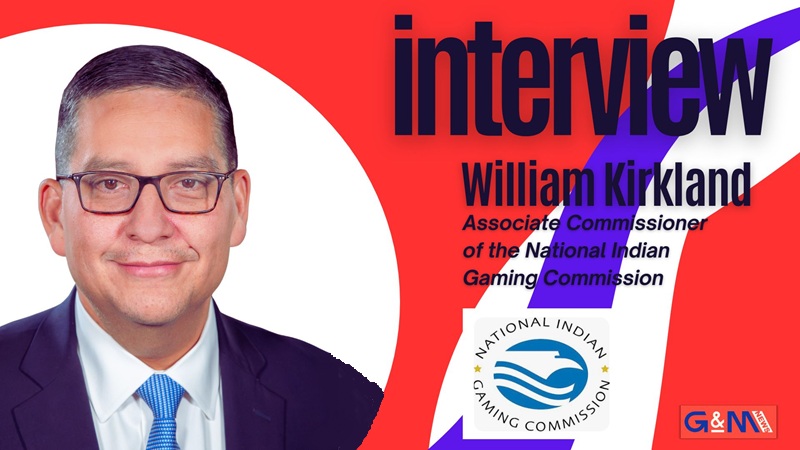
By Tatiana Martins, journalist at G&M News.
Since you arrived at your position in June 2026, what have been your key priorities, and how has your early experience shaped your vision for the Commission’s work going forward?
Since joining the National Indian Gaming Commission in June, my priorities have centered on strengthening the agency’s support for tribal gaming regulators, ensuring consistent regulatory compliance, and reinforcing the government-to-government framework that guides our work. Early engagement with tribal leaders, regulatory partners, and NIGC staff has given me valuable insight into the operational needs and challenges across Indian gaming. These experiences continue to shape my vision for advancing a strong, transparent, and responsive regulatory system that supports the integrity and success of tribal gaming nationwide.
You have emphasized the importance of maintaining a strong regulatory framework while supporting tribal economic development. How do you see the NIGC balancing effective regulation with the continued growth and competitiveness of tribal gaming operations?
NIGC’s role is to ensure that tribal gaming remains well-regulated while supporting the continued strength of tribal economies. The Indian Gaming Regulatory Act provides the flexibility needed to achieve that balance. NIGC regulations allow tribes to request approval of alternate standards that provide a level of security and integrity sufficient to accomplish the purpose of the existing standard. This helps maintain a robust regulatory system that supports both compliance and the long-term growth and competitiveness of tribal gaming operations.
As an enrolled member of the Navajo Nation and now serving in a leadership role at the NIGC, how does your personal and professional background shape your perspective on tribal sovereignty and the future of Indian gaming?
My background reinforces the importance of tribal sovereignty as the foundation of Indian gaming and the broader government-to-government relationship that guides the Commission’s work. My professional experience in public service has shown that strong, consistent oversight is essential to protecting the integrity of gaming while supporting tribal nations as they pursue economic opportunities that reflect their own priorities. That perspective shapes my commitment to ensuring NIGC continues to provide clear regulatory standards, responsive support, and a framework that strengthens the long-term stability and future growth of Indian gaming.
Brazil’s regulated betting market is still in its early stages, while the U.S. tribal gaming sector has decades of regulatory experience. What lessons from the tribal gaming model do you believe could help emerging regulated markets strengthen governance, integrity, and long-term sustainability?
The U.S. tribal gaming system has benefited from decades of close cooperation among tribal gaming operators, regulators, and oversight bodies, and that collaboration has been central to maintaining strong governance and long-term integrity. A key lesson for emerging markets is the value of establishing clear regulatory structures that encourage regular information sharing, promote consistent enforcement, and support continued workforce training so regulators can keep pace with industry developments. Tribal gaming also shows the importance of building a strong pipeline of future regulators, ensuring that oversight remains professional, well resourced, and responsive as markets evolve. These foundational practices have helped sustain the stability of tribal gaming and can serve as useful guideposts for new regulated environments seeking durable, principled systems.
The gaming industry continues to evolve through technological innovation, digital transformation, and changing player expectations. What regulatory challenges and opportunities do you believe will have the greatest impact on tribal gaming over the next few years?
New technologies such as Artificial Intelligence, digital payments, cloud-based systems, and sophisticated gaming platforms can improve operations and player experience. The protection of this experience should go hand in hand with ensuring flexibility for tribal gaming enterprises to innovate, compete, and continue generating the economic benefits that gaming was intended to provide for tribal communities. At the same time, the increasing sophistication of cyber threats underscores the need for regulators and operators to stay current on cybersecurity best practices, modernize internal controls, and maintain resilient systems. Together, these developments will shape how the NIGC keeps on supporting strong regulatory frameworks that protect tribal gaming while enabling tribes to responsibly explore innovation and future growth.