








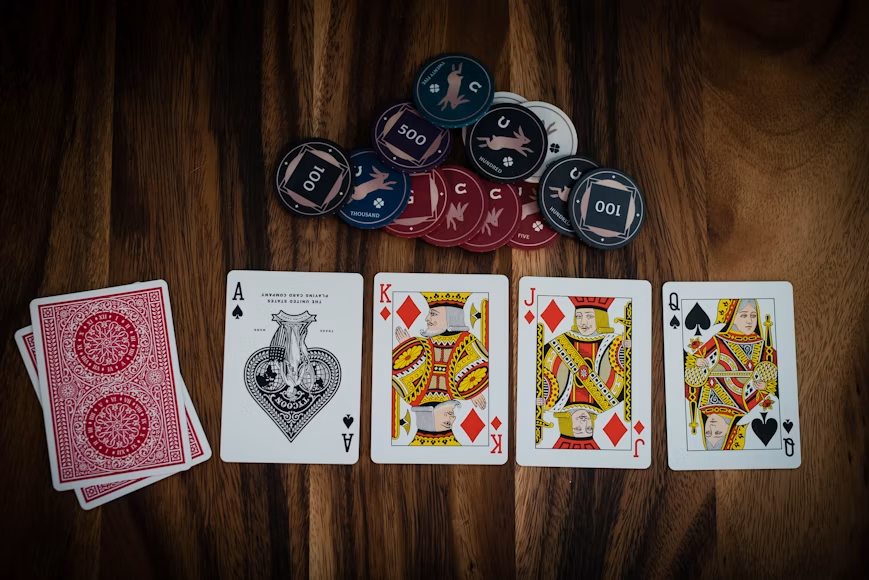
Poker has never really been one single game. It is more like a family of related card games. They are all built around familiar hand rankings but with different rules and styles of play.
That variety is part of why poker remains so popular. Online play has made it easier to find different formats. Tournaments and casual games continue to introduce people to versions they might never have encountered at a traditional table. There is also far more room for experimentation now and unusual variations sitting alongside the classics.
One version still continues to dominate the conversation.
Texas Hold’em Is Still the Biggest Form of Poker
Texas Hold’em is the version most people picture when they think of poker.
Its exact early history is a little murky. The game is generally associated with Texas before spreading more widely through the United States during the 20th century. By the late 1900s, it had become a major tournament game. The online poker boom helped push it to an even larger audience.
The rules are relatively simple.
Each player receives two private cards. Then five community cards are dealt face up in the middle of the table. Those community cards arrive in stages called the flop, turn, and river.
Players then make the best five-card hand possible from the seven cards available to them.
That simple structure creates a surprising amount of strategy.
A player has to think about starting hands and what opponents might be holding. There is also plenty of room for bluffing because nobody can see anyone else’s two private cards.
Texas Hold’em works equally well as a casual game or in a tournament format. The different ways to play Texas Holdem online continue to help with its popularity.
The game has a good balance for most players. The rules are easy enough to learn in one sitting but complicated enough to spend years improving.
Omaha Adds More Cards and More Possibilities
Omaha looks similar to Hold’em at first, but those extra cards change the game dramatically.
Players receive four private cards instead of two.
The catch is that exactly two of those private cards must be used alongside exactly three community cards to make the final hand.
That creates far more possible combinations.
Strong hands appear more often. This means players usually need to think beyond simply making a pair or two pair. Draws are also more common.
Pot-Limit Omaha (often shortened to PLO) is the most common version.
It has developed a loyal following among players who enjoy the community-card structure of Hold’em but want more complicated hand possibilities.
Five-Card Draw Keeps Things Old-School
Five-card draw is one of the most familiar forms of traditional poker.
It is also very straightforward. Each player receives five private cards and then gets the chance to discard some of them and drawreplacements.
There are no community cards.
That makes the game feel very different from modern Hold’em.
Players have less visible information to work with. This means that betting behavior becomes especially important.
Five-card draw is also closely related to the basic structure seen in video poker. Cards are held and replaced in much the same way. The two games do work very differently overall.
Draw poker can be an easy way to understand hand rankings because every player is simply trying to improve one five-card hand.
Seven-Card Stud Was Once the Major Poker Game
Seven-Card Stud was once one of the biggest poker formats in the United States.
It uses no community cards. Players gradually receive seven cards of their own. That creates a very different type of information game.
Players can see part of what opponents are working with and use that information when making decisions.
Remembering which cards have already appeared can become important too.
A player hoping to complete a flush may notice that several useful cards of the same suit are already visible elsewhere on the table.
Stud tends to move at a slightly different pace from Hold’em and rewards good observation. It remains one of the major classic formats.
Online Poker Has Made Variations Easier to Find
The growth of online poker has helped smaller formats survive and find audiences.
A physical card room can only run games when enough interested players happen to be in the same place.
Online platforms can bring people together from a much wider pool.
That makes new formats or mixed games easier to find.
Digital poker has also encouraged new ways of playing, including fast-fold games that immediately move a player to another table after folding.
The basic poker rules remain familiar.
The pace changes dramatically.
Poker Keeps Changing Without Losing Its Core
Poker is often talked about across all aspects and elements of culture. It has become a huge game with people debating its skill and luck levels.
Texas Hold’em is still the biggest form of poker because it balances simple rules with a huge amount of strategic depth.
But the variety is one reason poker continues to thrive. The cards and hand rankings may be familiar, but there are still plenty of different ways to play them.