See more of G&M News on Google
Add as a preferred source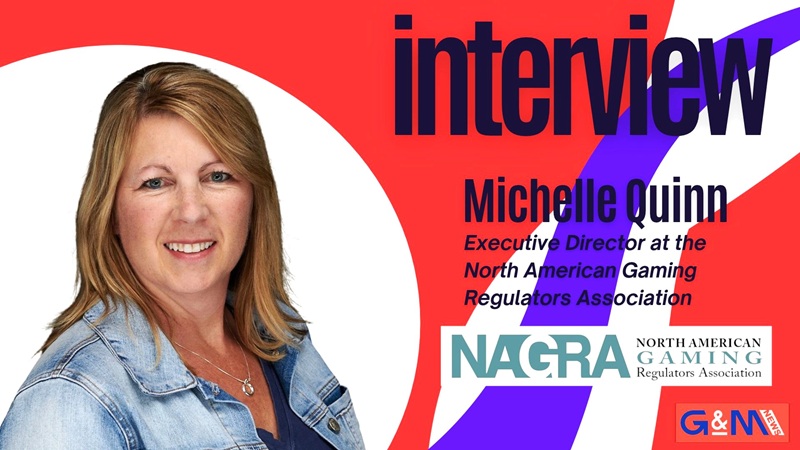
By Tatiana Martins, journalist at G&M News.
You have been appointed NAGRA’s inaugural Executive Director after playing an important role in the Association’s conferences, membership activities, and daily operations. How does this expanded leadership role represent a new chapter in your professional career, and what are your main priorities as you take on this position?
Becoming NAGRA’s inaugural Executive Director builds directly on years of supporting our conferences, membership, communications, and day-to-day operations. It marks a shift from enabling the Association’s work to helping lead it: translating the Board’s strategic vision into results for our members, working alongside NAGRA President Jeremy Locke, the Board of Directors, and member agencies across North America. My priorities follow the four goals of NAGRA’s refreshed strategic plan: an engaged membership, with active committees and regulators connected year-round rather than only at our annual conference; quality, relevant education, including recognized, accredited training; an expanded NAGRA community, with membership and partnerships that reflect every province, territory, state, and tribal jurisdiction we serve; and a strong organizational foundation, with sound financial planning, clear governance, and continuity, so that NAGRA delivers lasting value to its members.
The organization brings together gaming regulators from across North America. What do you consider the most important challenges facing regulatory authorities today, and how can the Association help its members address these issues through collaboration and knowledge sharing?
Regulators across North America are overseeing a market that is changing faster than traditional oversight models were designed for. Digital products cross jurisdictional boundaries, prediction markets and event contracts are testing the limits of state and provincial authority, and illegal operators adapt quickly. At the same time, regulators must maintain strong anti-money laundering (AML), know-your-customer (KYC), payment, and fraud-prevention controls, and enforce responsible gaming and advertising standards across overlapping jurisdictions. Technology, including AI-driven systems, brings both risk and opportunity, and as experienced staff retire, agencies must also preserve institutional knowledge while building digital-era skills. As our President has recently said, this is a moment for regulators to lead, not just react. NAGRA’s role is to give regulators a trusted space to learn from one another before challenges become crises. Through webinars, interest groups, conference programming, and focused regulator-only forums such as our Regulator Summit at G2E, members compare enforcement trends, share lessons learned, and build reusable solutions rather than starting from scratch. We are also extending that exchange beyond the continent through partnerships with organizations such as the International Association of Gaming Regulators and the International Association of Gaming Advisors.
As the gaming industry continues to evolve, regulators must respond to new technologies, business models, and consumer protection concerns. How will NAGRA strengthen its educational programs and professional development initiatives to help regulators keep pace with these changes?
Education sits at the heart of NAGRA’s vision to be the premier resource of relevant gaming information and education for our members. Our approach is to keep training practical, timely, and accessible to seasoned regulators and newer staff alike. The most significant step forward is our new collaboration with UNLV’s International Center for Gaming Regulation, which will deliver education as pre-conference training at the 2027 conference in Reno. It signals a shift toward more formal professional development, and we are pursuing continuing education credit through recognized accreditation bodies so that members’ learning carries lasting value. Alongside that, we will continue to build year-round learning through member webinars, re-engaged interest groups that help set topics and share practice, and conference programming that includes hands-on workshops and focused peer roundtables. By drawing on regulators, academic institutions, and technical specialists, NAGRA helps members understand emerging products and technologies without compromising regulatory independence.
Stakeholder engagement and communication are essential to the success of an association representing diverse regulatory jurisdictions. What strategies will you pursue to strengthen member participation, encourage cooperation among committees, and ensure NAGRA continues to meet the needs of its members?
Diverse jurisdictions bring different statutory frameworks, resources, and priorities, which makes clear, consistent communication essential. Our strategic plan commits NAGRA to active committees, including Membership, Conference, and Communications, each with Board participation and recognition for the members who serve on and chair them. We will gather input through regular polls, surveys, and interest groups, and route common themes to the appropriate committee or the Board so that members can see their feedback translate into action. Participation must also be broad. We are reaching out directly to current, lapsed, and prospective jurisdictions across every province, territory, state, and tribal nation, and we will encourage smaller and newer agencies to contribute ideas, speak on panels, and join committees and working groups. NAGRA is strongest when it reflects the full range of regulatory perspectives across North America, and our goal is for every member to see clear value in being part of the community.
What are your long-term goals for NAGRA, and how do you envision the Association’s role in shaping the future of gaming regulation and regulatory cooperation across North America?
Over the long term, our vision is for NAGRA to be the premier resource for North American gaming regulators: the first place our members turn for relevant information, education, and peer connection. That means an association whose membership truly reflects North America, including provincial, territorial, state, and tribal jurisdictions across commercial, lottery, charitable, racing, and tribal gaming, supported by mature partnerships and a credible, unified voice for competent regulation. As markets continue to converge and evolve, stronger cross-border and cross-jurisdictional dialogue will help regulators share best practices, protect consumers consistently, and adapt with confidence while respecting each jurisdiction’s unique authority. Equally important is the foundation beneath that work: multi-year financial planning, clear governance, and thoughtful succession, so that NAGRA’s institutional memory is preserved and the Association can sustain this work well into the future.