See more of G&M News on Google
Add as a preferred source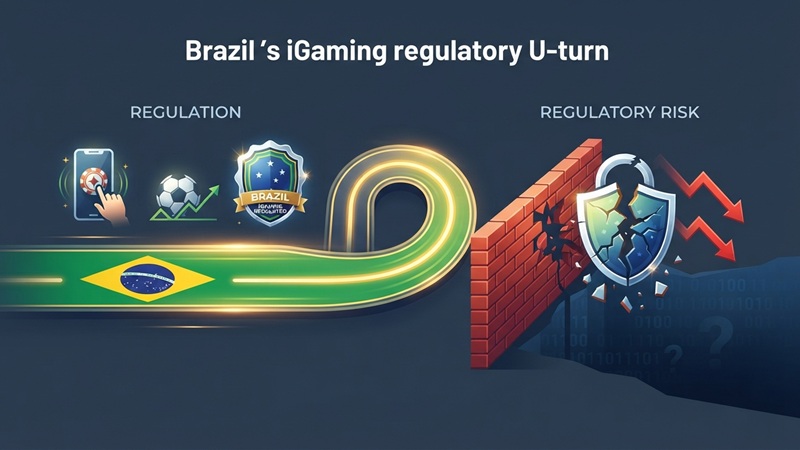
The shutdown of online gaming in Brazil has been remarkably swift. On September 25th, 2026, President Luiz Inácio Lula da Silva signed a provisional measure effectively bringing Brazil’s newly regulated fixed-odds betting market to an end. The measure covers both sports betting and online games, prohibiting their operation, offering, intermediation and advertising, and terminating the authorizations that had only recently been granted.
In this sense, the timing is difficult to ignore. The decision came just days before Brazil’s presidential election, at a moment when Lula was facing a closely contested race. Reuters described the ban as one of a series of measures announced in the run-up to the election. That does not establish that the prohibition was an electoral decision, and it would be too easy to make that assumption. But the political context is certainly relevant when assessing such a dramatic policy reversal.
More striking still is who created the market that is now being dismantled. The story did not begin with Lula. In 2018, Brazil adopted Law 13.756, creating the legal framework for fixed-odds betting on sporting events. But that did not mean that licensed operators could start operating. The necessary implementing regulations were not passed, and there was no functioning nationally regulated sports-betting market at that point. The decisive steps came later. Under Lula, Law 14.790 of December 2023 substantially developed the framework and, importantly, brought online games into the regulatory regime. Detailed implementing rules followed in 2024, and the regulated national market finally opened on January 1st, 2025.
In other words, this is not simply a case of one government dismantling the iGaming policy of another. Brazil has dismantled, in September 2026, a market that its own government had spent the previous two years constructing. That is what makes the Brazilian case so significant for the international industry.
What does evidence actually say?
Government’s concerns are serious and certainly legitimate. Gambling can indeed cause financial, psychological and social harm. Brazil has observed rapidly rising betting expenditure and concerns about household indebtedness. The government has especially highlighted the particular vulnerability of low-income households. One of the most widely reported examples concerned Bolsa Família, Brazil’s federal cash-transfer program for low-income families. A Central Bank analysis estimated that people belonging to households receiving the benefit had transferred approximately R$3 billion to betting platforms in August 2024.
But this particular figure also illustrates why the policy debate needs greater precision. Brazil’s Federal Court of Accounts (TCU) subsequently identified methodological limitations in the Central Bank’s analysis. The data could establish that people associated with Bolsa Família households had transferred money to gambling platforms, but not that the money transferred had actually come from the social benefit. Beneficiaries can, of course, have other income. The TCU also identified other data-quality problems, including the difficulty of determining the origin of the funds, the treatment of outliers and potentially irregular transactions, as well as the absence of a clear methodology for establishing which transfers were actually related to betting. That does not invalidate the underlying concern. It does, however, raise a more interesting question: does the available evidence justify prohibiting fixed-odds sports betting and online games all at once, or should policymakers first establish more precisely where the greatest risks lie?
International research suggests that gambling-related harm is not distributed evenly across products or consumers. A 2024 systematic review and meta-analysis by Tran, Wardle, Colledge-Frisby et al., published in The Lancet Public Health, examined 380 representative samples from 68 countries and territories. It estimated the global prevalence of problematic gambling at 1.41% among adults. Crucially, it also found substantial differences between gambling activities, with the highest prevalence associated with online casino and slots gambling, at 15.8%. The conclusion cannot be that sports betting is harmless. Nor does it follow that online casino should automatically be prohibited. The more relevant conclusion is that different products and different patterns of play may generate different levels and types of risk.
Were there alternative policy options?
That opens the door to another policy option: regulate the entire market but differentiate the regulatory response according to demonstrable risk. Brazil could, for example, have retained a comprehensive licensing system while imposing particularly stringent requirements on higher-risk products and behaviors, strengthening affordability controls, monitoring expenditure patterns and using the data generated by the regulated market to assess whether those measures were working. That would still be regulation of all products. It would simply be not only technically risk-based regulation but also behaviorally risk-based regulation. Indeed, immediately before the decision was taken by the end of September, the government had reportedly considered a more differentiated approach: banning online casinos while retaining sports betting alongside restrictions on advertising by betting companies.
There is another particularly striking element to the timing of the prohibition. In April 2026, only months before the ban, Brazil’s Ministry of Finance and the Institute for Applied Economic Research (IPEA) agreed to develop indicators and studies using administrative data from the gambling market. The proposed work included measuring the illegal market, household indebtedness, mental-health effects and risks to the financial and sporting sectors. Brazil was therefore beginning to develop precisely the evidence base that could have allowed it to assess the consequences of the newly regulated market in a systematic manner. The prohibition came before that process could mature.
This is not an argument for ignoring evidence of harm. It is an argument for asking whether a policy as consequential as prohibition should be based on evidence sufficiently granular to distinguish between products, behaviors, and consumer groups.
How long will the legal process take?
There is a further dimension that should concern the industry: time. The prohibition is now before Brazil’s Supreme Federal Court. After lower courts issued conflicting injunctions allowing individual operators to resume activity, Justice Luiz Fux has suspended all lower court proceedings concerning the ban until the Supreme Court considers its constitutionality. Four constitutional actions are pending. Meanwhile, Congress has extended the provisional measure by another 60 days without yet voting on it. There is therefore still no clear timetable for resolving the future of the regulated market.
For a court, years may be an entirely normal timeframe for resolving a complex constitutional question. For an international operator, investor or technology supplier, years can be commercially decisive. By the time a final judgment arrives, companies may have withdrawn from the market, employees and suppliers may have moved elsewhere, sponsorship agreements may have disappeared, and consumers may have established relationships with offshore or illegal operators. The question is therefore not only whether Brazil ultimately wins or loses the constitutional argument.
What happens while the court decides?
That may ultimately be the more important question for regulators and governments elsewhere. Gambling companies are accustomed to regulatory change. Taxes increase. Advertising rules tighten. Responsible-gambling obligations become more demanding. Licenses come with conditions. That is regulatory risk. Brazil introduces something more fundamental: the possibility that a government can establish a licensing framework, invite substantial investment, issue licenses, and then terminate the market before the regulatory experiment has had much time to mature.
The Brazilian government says the termination serves the public interest and explicitly provides that existing operators are not entitled to compensation for lost profits, investments made or expectations of continued activity, nor to a full or partial refund of the license fees. The 85 authorizations issued had generated R$2.55 billion in payments to the state. For listed companies, this is particularly significant. Regulation can be priced into an investment decision. Regulatory discontinuity is much harder to price, and other countries will be watching.
Will Latin America follow?
It would be premature to predict a wave of prohibitions across Latin America. Brazil’s decision could just as easily encourage investment towards jurisdictions where operators believe the regulatory framework is more stable. But the political lesson will still be noticed.
Brazil is the largest economy in Latin America and one of its most important consumer markets. If gambling becomes associated with household debt, vulnerable consumers and social harm, other governments may ask themselves whether regulation remains politically sustainable. They may not copy Brazil’s prohibition. They may instead tighten advertising rules, impose stronger affordability requirements, restrict particular products or increase taxes. That may actually be the more likely consequence.
The Brazilian precedent is therefore not necessarily “ban gambling.” It may be “if regulation fails to produce acceptable social outcomes, governments retain the political option of reversing course completely.” For investors, that distinction matters enormously.
What about the old prohibition dilemma?
There is also a practical problem. If demand for gambling persists, prohibition risks shifting consumers from licensed operators into the illegal market again. A regulated operator can be required to verify age and identity, monitor player behavior, impose limits, identify suspicious transactions and provide data to the regulator. A non-licensed operator does not have those obligations.
This is the fundamental channelization dilemma facing gambling policy: does prohibition reduce gambling-related harm, or does it move part of the market into an environment in which regulators have considerably less visibility and control?
Was Brazil’s experiment simply too short?
Perhaps the most interesting alternative to prohibition is therefore not to return to 2018, nor to argue that sports betting should be treated as fundamentally different from online casino. Brazil could retain a comprehensive regulatory framework while becoming considerably more evidence-driven about how different products and consumer behaviors should be regulated within it.
The country had only a very short period in which to observe the effects of its newly regulated market before deciding that the model should be abandoned. The real question may therefore be whether Brazil moved too quickly in both directions: opening the market without sufficiently understanding how Brazilian consumers would respond to different products, how sports betting would differ from online casino, and then closing it before there was enough evidence to assess whether those risks could be addressed through more differentiated regulation.
For the iGaming industry, the lesson is uncomfortable whatever the way forward may look like. The debate is no longer simply about how much regulation companies can accept. It is about whether a regulatory framework can provide enough stability for companies to make long-term investments in the first place. That is a question that reaches far beyond Brazil.