






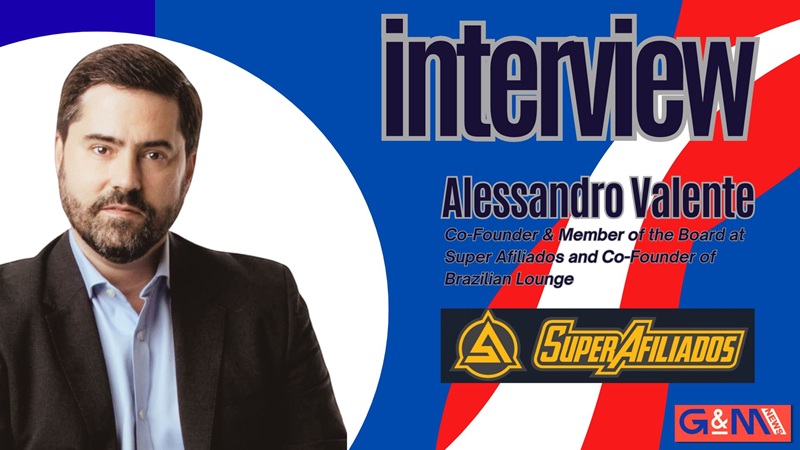
You are internationally recognized and have a career spanning more than two decades, standing out for your ability to identify opportunities and innovate within the iGaming sector and organize events in the segment with global reach. Could you trace a retrospective of the early days of iGaming in Brazil to the present day, now within a regulated environment?
Two decades, or perhaps a little more, have passed, but I still remember every stumble and every time I had to get back up along my iGaming journey. There were far more difficulties than anyone imagines, although they don’t always appear when you only look at the results. When everything was still uncharted territory, as we often say in Brazil, the market was practically a lawless land. Many companies operated here in a way that was quite different from that adopted in already regulated markets. Few sought to follow the best practices that already existed abroad. Fortunately, I had great friends, partners, and associates by my side who shared the same vision: sooner or later, Brazil would have regulations capable of protecting consumers, entrepreneurs, and the State itself. Throughout this journey, we saw several waves that profoundly impacted the market. One of the most significant occurred in late 2014 and early 2015, when operators considered solid unilaterally reduced commissions, terminated affiliate programs, and caused enormous losses for thousands of affiliates. Historically, affiliates have always been at the most vulnerable end of the chain and, therefore, suffered directly from currency fluctuations, changes in payment methods, supplier restrictions, and sudden modifications in the rules imposed by operators. Today, we live in a completely different reality. The market has clear laws, regulations, and rules that establish responsibilities for all participants. This is exactly what we needed to build a healthy, sustainable industry prepared to grow in the long term. There are still important challenges and debates about regulation, but the overall result is extremely positive, especially for consumers, who finally have protection mechanisms that simply did not exist a few years ago.
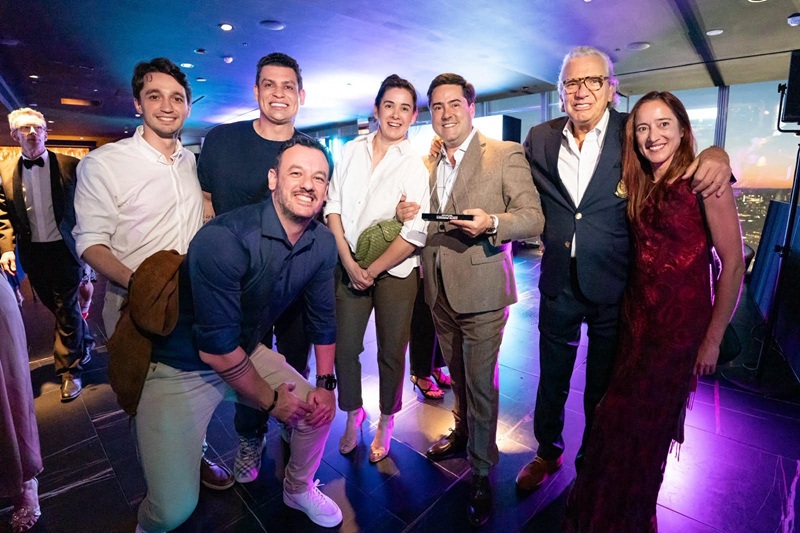
Among the various awards you have already received, you now have another achievement with the important distinction of the “Affiliate Idol 2026,” consolidating your legacy that pioneered the transformation of iGaming in Latin America. How do you feel about this recognition?
Receiving the ‘Affiliate Idol’ was a huge surprise. I never imagined that my work developed in Brazil could be recognized internationally in this way. When I started, Brazil wasn’t even seen as a promising market. I remember participating in the old London Affiliate Conference, organized by my friend Alex Pratt, and having to convince international operators that it was worthwhile to look at Brazil and Latin America. Many times, it was difficult even to get a meeting. Therefore, receiving today the same recognition given to names I’ve always admired, such as Ory Weihs of XLMedia, and Jesper Søgaard and Christian Kirk Rasmussen of Better Collective, is a huge honor. More than a personal award, I see this recognition as a tribute to an entire generation of entrepreneurs who believed in the potential of the Latin American region when almost no one else did.
What is really missing for the gaming sector in Brazil to assume a definitive leading role in the global scene?
In my opinion, Brazil is already experiencing this transition. Perhaps it’s not perceived by those who have recently entered the sector, but those who have followed the market from the beginning can see how much we have evolved. Of course, there are still challenges. We need regulatory stability, legal certainty, and an environment where the sector is treated in a balanced way, without disproportionate restrictions compared to other entertainment industries. But, looking at the scenario as a whole, we have never been so well positioned. I remember that, years ago, when Super Afiliados surpassed the mark of a thousand players referred in a single month, it was a reason for celebration. It wasn’t common. There were other large affiliates achieving good results, but everything was much more difficult. Today, we see companies moving tens of thousands of new players monthly. This demonstrates how much the market has matured. From the perspective of business volume, technology, professionalization, and regulation, Brazil is experiencing one of the most important moments in its iGaming history and has all the conditions to assume a permanent role among the largest markets in the world.
You have the ability to detect and anticipate trends. What would be the likely future of the iGaming market in Brazil?
If I had the ability to predict the future, I would probably be a much better businessman than I am. What I can do is analyze trends and compare the evolution of Brazil with markets that I have followed closely, such as the United Kingdom and Malta. No market is identical to another. Brazil has very unique cultural, economic, and regulatory characteristics, which makes any prediction merely an exercise based on probabilities. I believe that we will still see an important evolution of regulation. Some rules will need to be improved, others will certainly emerge. This is part of the natural maturation of any regulated market. I also understand that we will see a consolidation of the sector. The high tax burden, the increase in compliance costs, and the regulatory requirements tend to favor more structured companies. Therefore, I consider it inevitable that the coming years will be marked by mergers, acquisitions, and greater market concentration. At the same time, I see enormous opportunities for innovative companies. Whenever a market matures, new business models, technologies, and ways of serving the consumer emerge. Therefore, I remain quite optimistic about the future of Brazilian iGaming.
G&M News will hold the third edition of G&M Events Brazil 2026 in São Paulo on August 13th, bringing together leaders from the Brazilian gaming sector, speakers, and experts. Given your experience and business vision, what is the importance of meetings like these in a scenario where the dynamics and debates of regulation are present in all media?
I can say with great conviction that all serious events held today in Brazil and Latin America, regardless of their size, play an extremely important role in the development of the industry. It is in these environments that operators, affiliates, suppliers, regulators, parliamentarians, and experts can dialogue, exchange experiences, and build solutions to common challenges. The greater the dialogue, the higher the quality of decisions made by the sector tends to be. Events such as those promoted by G&M News, as well as so many other relevant market initiatives, contribute directly to the professionalization of the industry and to the construction of an increasingly solid and transparent business environment. In the case of BiS SiGMA, we have always believed that our mission went far beyond organizing a business fair. The objective has always been to connect people, bring markets closer together, and create a space where important decisions could emerge from conversations between the different agents in the sector. This same purpose continues to be present in the regional events that we organize and support throughout Brazil. I am happy to share this vision with great partners and friends, such as Eman Pulis, Carlos Cardama, Yudi Osugui, and Flavio Figueiredo. We all believe that dialogue, cooperation, and collective construction are the most efficient ways to strengthen the industry. When we work together, we can deliver much more value to the market than when each one acts in isolation.