








What Gamification Actually Means in 2026
Gamification is the application of game design mechanics to non-game or game-adjacent contexts with the goal of increasing motivation, participation, and retention. In the iGaming industry specifically, it has evolved from a marketing tactic into a core product architecture decision.
The Core Mechanics Driving Engagement
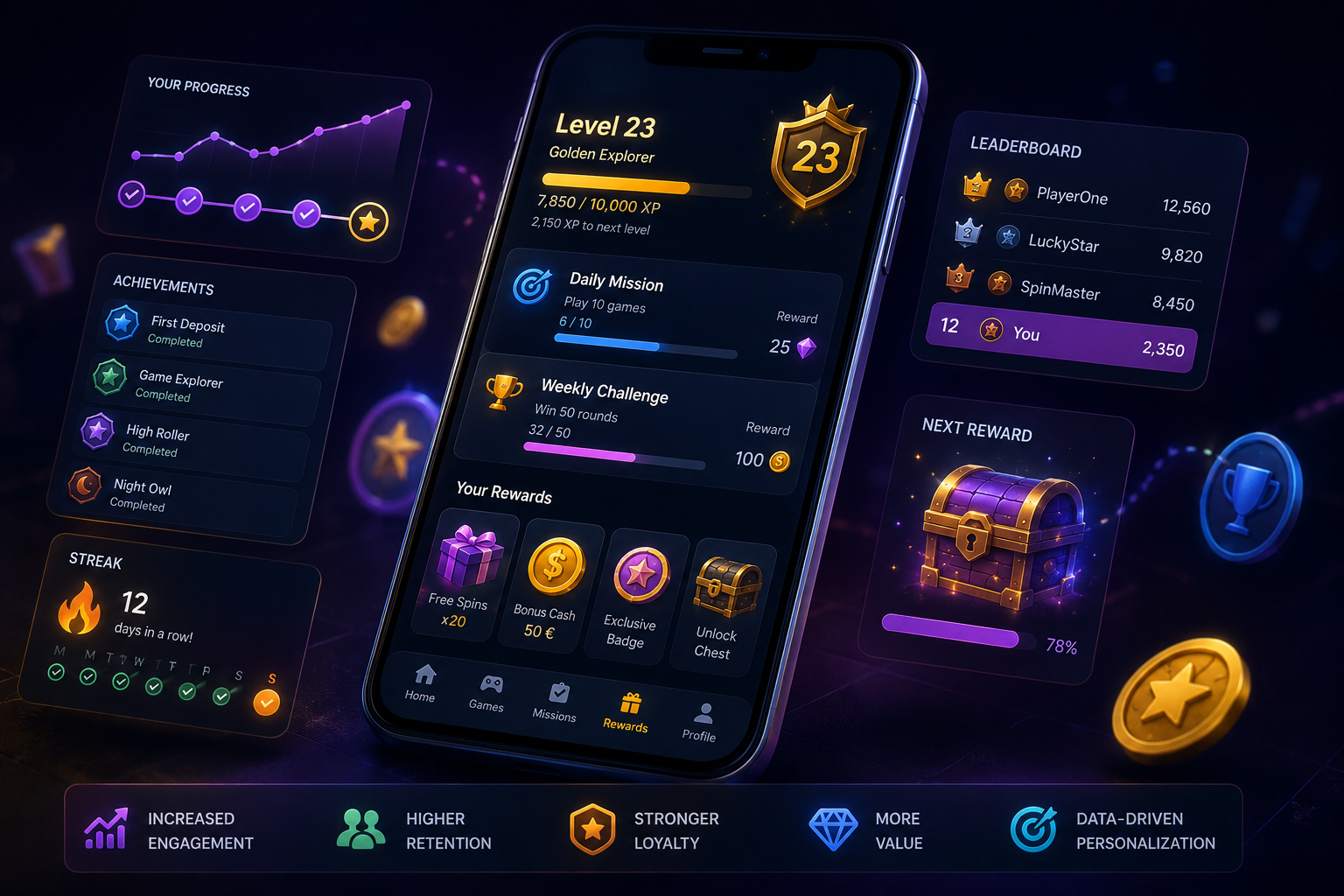
The most effective gamification systems rely on a consistent set of psychological triggers that have been validated across industries and user demographics. These mechanics work because they align with fundamental human motivations including progress, recognition, competition, and reward anticipation.
- Progress bars and level systems that give users a visible sense of advancement and create a natural incentive to continue engaging with the platform to reach the next milestone.
- Achievement badges and unlockable rewards that provide recognition for specific behaviors, from completing a profile to reaching a session frequency threshold.
- Leaderboards and competitive rankings that activate social comparison instincts and drive repeat engagement among users motivated by status and peer recognition.
- Daily missions and time-limited challenges that create habitual return patterns by giving users a specific reason to log in within a defined window.
Why These Mechanics Work Across Industries
The psychological foundations of gamification are not specific to gaming audiences. Research in behavioral economics has consistently demonstrated that variable reward schedules, progress visibility, and social proof influence decision-making across all demographic groups and digital contexts.
How Modern Casino Platforms Structure Engagement
Contemporary iGaming platforms design their engagement systems as layered ecosystems where multiple mechanics operate simultaneously, each targeting different player motivations and session patterns. A player might be progressing through a level system, competing in a weekly tournament, and working toward a milestone bonus all within the same session.
- Tiered loyalty programs with clearly communicated progression criteria, tangible benefits at each level, and visible distance indicators showing how close a player is to the next tier.
- Mission-based reward systems where players complete specific tasks, such as trying a new game category or reaching a session frequency target, to unlock bonuses or free play credits.
- Tournament and prize pool structures that run on predictable schedules, giving regular players a recurring competitive context that increases platform stickiness.
- Personalized challenge systems driven by behavioral data, where the tasks presented to each player reflect their actual play history rather than generic platform-wide objectives.
The Behavioral Science Behind Engagement Design
Effective gamification is grounded in well-documented behavioral science principles. Understanding these principles helps explain why certain mechanics produce durable engagement while others generate short-term spikes followed by rapid drop-off.
Variable Rewards and Anticipation Loops
Variable ratio reward schedules, where rewards are delivered unpredictably rather than at fixed intervals, produce the strongest and most persistent engagement patterns according to decades of behavioral research. This principle underlies both slot mechanics and gamified mission systems in equal measure.
The Endowment Effect in Loyalty Programs
Once users have accumulated points, progress, or status within a platform’s gamification system, they assign disproportionate value to what they have already earned. This endowment effect creates a natural retention force that makes switching to a competing platform feel like a genuine loss rather than a neutral choice.
Responsible Gamification: Where the Industry Is Drawing Lines
As gamification mechanics have become more sophisticated, regulators across European markets have begun scrutinizing their application in online gaming contexts. The distinction between engagement design and manipulative mechanics has become a central compliance question for operators.
- Transparency in reward mechanics, ensuring that players can clearly understand what triggers a reward and what the actual probability or criteria for receiving it are.
- Opt-out availability for all gamification layers, giving players the ability to disable missions, leaderboards, or progress tracking without affecting their access to core platform features.
- Integration of responsible gambling checkpoints within gamification flows, so that progress milestones also serve as natural moments for players to review their activity and spending patterns.
How Leading Operators Are Applying These Principles
The platforms gaining the most ground in competitive European markets are those that have found a balance between engaging gamification design and responsible implementation. Lemon Casino PL is among the operators applying this layered approach, combining tiered progression systems with mission-based rewards while maintaining transparency around how each mechanic functions and ensuring players retain control over their engagement settings.