









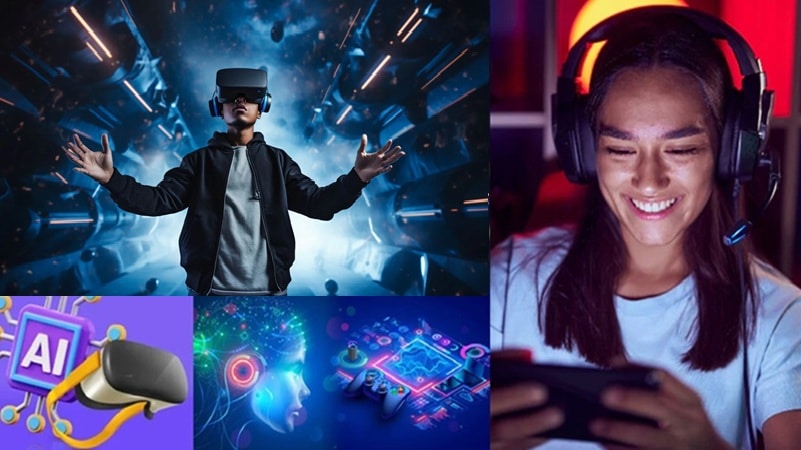
The world of gaming has come a long way since its inception, and advancements in technology continue to push the boundaries of what is possible. Two of the most promising technologies shaping the future of gaming are artificial intelligence (AI) and virtual reality (VR). The integration of AI and VR has the potential to revolutionize the gaming industry, offering immersive experiences, lifelike characters, and adaptive gameplay.
In this article, Anton Paramonov. CPO at Whimsy Games, explores the emergence of AI in gaming, the role of AI in game development, the impact of AI on gameplay and strategy, advanced AI technologies in gaming, navigating the business landscape with AI, addressing ethical considerations, and the future prospects of AI in the gaming industry.
Understanding the Emergence of AI in the Gaming Industry
The gaming industry has always been at the forefront of technological advancements, and artificial intelligence has played a pivotal role in its evolution. From the early days of video games, AI has been employed to create player characters and game mechanics, enhancing the overall gaming experience. As machine learning algorithms continue to advance, AI is now capable of designing immersive experiences that adapt to player behavior, truly transforming the way games are developed and played. Let’s trace the roots of AI in early gaming and explore its transformation in modern gaming.
Tracing the Roots: AI in Early Gaming
Believe it or not, AI was a part of games long before the term “artificial intelligence” was even coined. In the early days of gaming, developers used AI algorithms to create player characters with varying levels of intelligence and behavior. These virtual beings were programmed to follow certain rules and interact with the game world, giving players a challenging and engaging gameplay experience.
The Transformation: AI’s Evolution in Modern Gaming
Fast forward to the present day, and AI has undergone a significant transformation in the world of gaming. With advancements in machine learning, AI is now capable of learning from player actions and creating immersive experiences that adapt to individual gameplay styles. From lifelike characters to procedural generation of game content, AI has revolutionized game development, pushing the boundaries of what is possible in virtual worlds. Today, game developers harness the power of AI to create games that are not only visually stunning, but also offer deep and immersive gameplay experiences.
The Role of AI in Game Development
AI continues to play a significant role in game development, enabling gaming executives to generate the best AI in VR racing games that are more immersive, dynamic, and lifelike than ever before. With the help of deep learning algorithms, AI can produce realistic game environments, design procedural content, and even develop lifelike non-player characters (NPCs). Let’s take a closer look at how AI enhances NPC development and graphics in VR games.
AI and Non-Player Character (NPC) Development
Non-player characters (NPCs) are an essential part of any game, adding depth and realism to the virtual world. AI algorithms have made significant advancements in creating lifelike characters with complex behavior patterns, making their interactions with players more immersive and unpredictable. With the integration of AI, game developers can now design NPCs that respond to player actions, adapt to different gameplay scenarios, and even learn and evolve as the game progresses. This level of character game development adds a new dimension to gameplay, enhancing the overall gaming experience.
Enhancing Graphics with AI in VR Games
Virtual reality gaming relies heavily on graphics to create immersive experiences, and AI has a significant role to play in enhancing these visuals. By leveraging AI algorithms, game developers can define tunning graphics that push the boundaries of realism, making players feel as if they are truly part of the virtual world. From lifelike textures to realistic lighting effects, AI algorithms can generate visuals that are indistinguishable from reality. The fusion of AI and VR in game development is paving the way for a new era of gaming, where players can immerse themselves in digital worlds that blur the line between fiction and reality.
The Impact of AI on Gameplay and Strategy
AI not only enhances the visual and immersive aspects of gaming, but also has a significant impact on gameplay and strategy. With its ability to adapt, learn, and respond to player actions, AI can create game environments that are more dynamic and challenging. AI-powered games can adjust their difficulty levels based on player skill, ensuring an engaging and personalized experience for every player. In addition, AI algorithms enable the creation of adaptive gameplay mechanics that keep players on their toes, offering new challenges and opportunities for strategic decision-making.
Realistic Game Environments Enabled by AI
One of the key benefits of AI in gaming is its ability to create realistic game environments that transport players to immersive and lifelike virtual worlds. AI algorithms can generate intricate details, such as realistic physics, weather effects, and environmental interactions, making the game world feel alive and dynamic. Whether it’s exploring a lush forest, traversing a bustling city, or venturing into deep space, AI allows game developers to craft game environments that mirror the real world, enhancing the player’s sense of presence and immersion.
Adaptive Difficulty Levels Powered by AI
The difficulty level of a game has a crucial role in player engagement and satisfaction. AI algorithms, with their adaptive nature, can dynamically adjust the difficulty level of games based on player actions, skill level, and game content. Here are some key points to highlight about adaptive difficulty levels powered by AI: a) AI algorithms analyze player actions and adjust the game difficulty in real-time, ensuring players are consistently challenged; b) Adaptive difficulty levels cater to players of different skill levels, creating a balanced and enjoyable experience for everyone; c) AI algorithms can generate content that matches the player’s skill level, offering a personalized gameplay experience; d) The integration of AI in game design allows for the creation of complex and challenging game scenarios, keeping players engaged and motivated, and e) Adaptive difficulty levels powered by AI promote player progression, providing a sense of accomplishment and mastery.
Exploring Advanced AI Technologies in Gaming
The future of gaming lies in the convergence of advanced AI technologies, such as natural language processing (NLP) and voice recognition, with immersive gameplay experiences. These technologies have immense potential to transform how players engage with games, from interacting with virtual characters using natural language to receiving real-time assistance from virtual assistants.
Navigating the Business Landscape with AI in the Gaming Industry
The integration of AI in the gaming industry is not only transforming gameplay and player experiences, but also reshaping the business landscape. From new revenue models to innovative marketing strategies, AI is enabling gaming companies to explore new horizons and stay ahead of the competition. Let’s delve into the impact of AI on revenue models and marketing strategies in the gaming industry.
New Revenue Models Unleashed by AI
AI is unlocking new revenue streams for gaming companies, revolutionizing traditional revenue models. Here are some key points to highlight about new revenue models unleashed by AI:
a) AI-powered games can offer personalized in-game purchases, enticing players to spend more on virtual goods, upgrades, or additional content.
b) Dynamically generated content, driven by AI algorithms, creates opportunities for new monetization strategies, such as microtransactions, subscriptions, or personalized offers.
c) AI-enhanced game testing processes make it easier for developers to identify player preferences, allowing them to tailor content to specific target audiences and optimize revenue generation.
d) In-game advertising can be personalized and targeted, using AI algorithms to analyze player data and deliver relevant ads, enhancing both player experience and advertising effectiveness.
e) The integration of AI in gaming opens up new avenues for revenue generation, providing gaming companies with diverse opportunities to monetize their products and services.
Revolutionizing Marketing Strategies in Gaming with AI
AI is revolutionizing how games are marketed to players, offering personalized experiences, targeted advertising, and data-driven insights. Here are some key points to highlight about revolutionizing marketing strategies in gaming with AI:
-AI algorithms analyze player data, allowing marketers to understand player preferences, behavior, and engagement patterns, enabling the creation of more effective and targeted marketing campaigns.
-Targeted advertising powered by AI ensures that players receive relevant and personalized ads, increasing the chances of engagement and conversion.
-AI algorithms can generate content based on player data, delivering personalized messages, offers, or rewards, enhancing player engagement and loyalty.
-Data-driven insights enable marketers to make informed decisions, optimize marketing campaigns, and create meaningful player experiences.
-The integration of AI in marketing strategies empowers gaming companies to attract, retain, and monetize players, ultimately driving business growth and success.
Addressing Ethical Considerations and Challenges of AI in Gaming
While AI has immense potential to transform the gaming industry, it also raises ethical considerations that need to be addressed. Protecting user data privacy, mitigating AI bias, and ensuring fair play are crucial aspects that gaming companies must navigate to build trust and foster an inclusive gaming environment. We can see how these ethical considerations are being addressed.
Tackling Privacy Concerns and Data Collection
Data privacy is of paramount importance in gaming, as companies collect and analyze player data to enhance user experiences. We can understand how to tackle privacy concerns and data collection:
-Gaming companies must prioritize user data privacy, implementing strict security measures to safeguard personal information and ensure player trust.
-Transparent data collection practices, explicit consent mechanisms, and user control over data sharing are essential for maintaining user privacy in gaming.
-Companies should strive to provide a seamless and user-friendly experience, ensuring that data collection processes do not impact gameplay or user enjoyment.
-Privacy regulations and industry standards play a crucial role in shaping data collection practices, holding gaming companies accountable for data privacy.
-User experience and data privacy must go hand in hand, with gaming companies finding a balance between collecting data for personalized experiences and respecting user privacy.
Mitigating Potential AI Bias and Discrimination in Gaming
AI algorithms are only as good as the data they are trained on, and if that data contains biases, it can lead to unfair gameplay experiences. Let’s consider some practices to mitigate potential AI bias and discrimination in gaming:
-Gaming companies must actively mitigate potential biases in AI algorithms, ensuring fair play, diversity, and inclusivity in games. This approach helps to create the most realistic AI in VR racing games.
-Regular testing, auditing, and evaluation of AI algorithms can help identify and address biases, promoting fair and balanced gameplay experiences.
-Collaboration with diverse development teams, data collection, and user feedback can improve the accuracy and inclusivity of AI algorithms in gaming.
-Responsible ai game dev processes, along with industry standards, can help gaming companies build games that are ethical, inclusive, and enjoyable for all players.
-By proactively addressing potential biases and discrimination, gaming companies can foster a gaming environment that celebrates diversity, fairness, and equality.
The New Era of AI-Driven Narratives and Storytelling
AI is pushing the boundaries of game narratives, enabling game developers to create dynamic, immersive stories that respond to player actions. These new narratives and storytelling can be addressed in different ways:
-AI algorithms analyze player decisions, behavior, and gameplay actions, generating narratives that adapt and evolve based on player choices.
-Interactive storytelling allows players to become active participants in shaping game narratives, immersing themselves in a world where their actions have real consequences.
-AI-driven narratives open up new possibilities for player engagement, sparking curiosity, exploration, and emotional connections within virtual worlds.
-With AI at the forefront of content creation, game developers can design vast, procedural narratives, offering endless possibilities and unique experiences for every player.
-The fusion of AI and storytelling sets the stage for a new era of gaming, where the boundaries of imagination are constantly pushed, captivating players with immersive, dynamic narratives.