








By Tatiana Martins, journalist at G&M News.
The phrase “super app” used to belong to Asia: WeChat, Grab, Alipay. In 2026, it belongs to sports betting. DraftKings has casino, sportsbook, DFS, and DK Replay running side by side. FanDuel is fighting to defend market share while Flutter pours billions into prediction-market product investments. Kalshi just raised USD 1 billion at a USD 22 billion valuation and is publishing daily NBA Finals odds threads through its @KalshiSports account. Polymarket is days away from launching a parlay system that could swallow the highest-margin product in the industry.
There aren’t three companies building three products anymore. It’s an arms race to own the entire bettor wallet, sportsbook, casino, and prediction market, inside a single login. For sharp bettors, the outcome of that race is going to reshape where the value lives, where the limits hit, and where the promos flow over the next 12 to 18 months.
What is a sports betting super app?
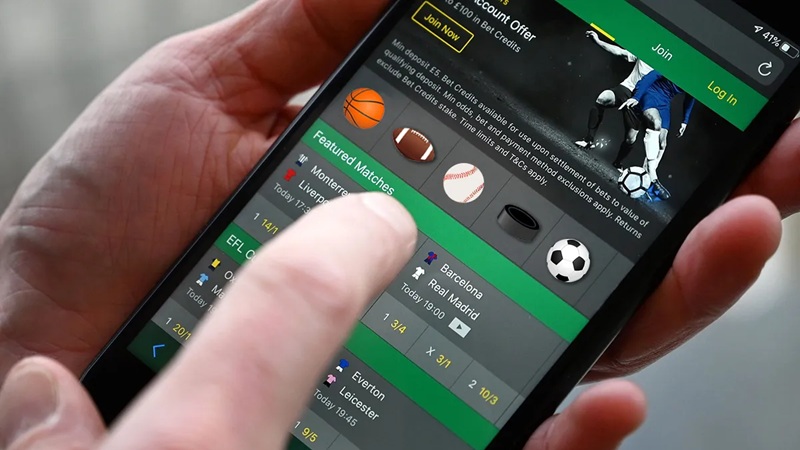
A super app is a single platform that bundles multiple product categories, historically, the kind of thing that would require separate accounts, separate deposits, and separate apps, into one experience.
In sports betting, the three categories converging in 2026 are:
- Traditional sportsbook: Spreads, totals, moneylines, props, futures, parlays. Regulated state-by-state under sports betting law.
- iGaming / online casino: Slots, blackjack, roulette, live dealer. Regulated separately, only legal in a handful of states.
- Prediction markets: Event contracts on real-world outcomes. Federally regulated by the CFTC, available in all 50 states (mostly), with sports increasingly being the dominant volume driver.
The super-app thesis is that the bettor who’s already deposited into your sportsbook is the same bettor who wants to play slots between innings, hedge a parlay on a prediction market, and run a sports-themed casino game when nothing’s live. Whoever owns that whole stack owns the customer.
DraftKings: the front-runner
DraftKings announced plans to launch a ‘DraftKings Sports & Casino Super App’ that will consolidate the company’s sportsbook, casino, lottery, and prediction offerings into a single platform. The goal is to provide a seamless user experience and make it easier for customers to access DraftKings’ full suite of gaming products, regardless of their location.
The first phase of the rollout is expected to coincide with the NCAA’s March Madness tournament in spring 2026.
By unifying its disparate apps and products into a single “super app,” DraftKings aims to streamline its operations, reduce customer acquisition costs, and increase overall engagement across its sportsbook, casino, and lottery verticals. The move also allows DraftKings to more effectively serve customers in states with varying degrees of gaming legalization, promoting sportsbook betting where permitted while highlighting its prediction and lottery products in more restrictive markets.
The DraftKings Super App will feature a single wallet and login, allowing customers to seamlessly transition between the company’s sportsbook, casino, lottery, and prediction offerings. What users see within the app will be tailored to the specific gaming laws in their state, with sportsbook access in jurisdictions where it is legal and prediction or lottery products in more restrictive markets.
The three contenders in 2026
DraftKings is having a monster 2026. Q1 numbers told the story: +24% year-over-year sportsbook revenue growth; +64% adjusted EBITDA expansion, and continued aggressive product roadmap (DK Replay, DK Casino expansion, DFS contests).
The strategic moat DraftKings is building is its product crossover. The same user who deposits to bet the Sunday NFL slate is the user being upsold on DK Casino blackjack on Monday night and DK Replay’s historical MLB at-bat micro-bets on a Tuesday afternoon. The app is engineered so a sportsbook customer never has a reason to leave.
FanDuel: the defending champion in trouble
FanDuel is still the largest U.S. sportsbook by handle, but Q1 2026 was its worst quarter in years: +6% revenue growth (vs. DraftKings’ +24%); -26% EBITDA decline (yes, negative), and parent company Flutter described 2026 as a “messy year”, driven by prediction-market spend and tough year-over-year comps.
FanDuel has iGaming through its FanDuel Casino product in legal states, but it doesn’t have a clean prediction-market story yet. If DraftKings cracks the bundle first, FanDuel’s market share erosion accelerates.
Kalshi: the insurgent
Kalshi isn’t a sportsbook. It’s a federally regulated prediction-market exchange. However, its 2026 trajectory is the most disruptive of the three: USD 1 billion Series F at USD 22 billion valuation (Coatue, Morgan Stanley, Sequoia, a16z, May 2026); USD 400 million open interest in sports markets — 38% in basketball alone; 6x year-over-year growth in NBA Conference Finals Game 1 volume, and @KalshiSports as a media brand, publishing daily NBA Finals odds threads, championship probabilities, big-trader spotlights.
Kalshi’s super-app play is the inverse of DraftKings’ one. Instead of starting as a sportsbook and adding prediction markets, Kalshi is starting as a prediction market and adding sportsbook-style coverage. The kicker: Kalshi works in California and Texas, states where DraftKings and FanDuel don’t exist. That’s tens of millions of bettors who can only get sports action through prediction markets, and Kalshi is positioning itself as their default.
Why operators are betting on the super app model
For operators, the strategic value of this convergence is clear: broader acquisition funnels, more flexible product design, and more ways to reach consumers across different jurisdictions.
The super-app model also helps reduce customer acquisition costs, increases cross-selling opportunities, and builds long-term retention by keeping users inside one ecosystem. As one industry analyst noted, “the bettor who’s already deposited into your sportsbook is the same bettor who wants to play slots between innings.”
It also helps explain why some gambling companies are now experimenting with their own prediction-style offerings, even as others lobby against them.
Regulation will decide the pace
The real story is whether regulators and courts decide they belong inside gambling law, derivatives law or a separate category altogether. In the U.S., that question is already producing lawsuits, state-level objections and growing congressional pressure.
Outside the U.S., the picture is also evolving. Canada has seen tighter scrutiny around predictive markets, and Europe is beginning to test whether licensing and clearer rulemaking can provide a framework for products that blur the line between betting and trading. Gibraltar’s first prediction market license is one sign that some jurisdictions are willing to explore that route.
The bigger takeaway
The rise of gaming “super apps” is evidence of how rapidly the betting market is evolving and how operators are trying to build more resilient, diversified businesses that can withstand regulatory change and market saturation.
For the industry, that is a positive development. It means more innovation, product diversity, and more ways for operators to serve different audiences in different jurisdictions. Companies that understand how to bundle these formats intelligently will be the ones best positioned for the next phase of expansion.