








By Tatiana Martins, journalist at G&M News.
For decades, cash has been an intrinsic part of the casino experience. Banknotes are exchanged for chips, tickets are converted into money, and players have traditionally relied on physical currency to manage their gaming activity. But consumer payment habits have changed dramatically.
Mobile wallets, contactless cards and instant digital payments have become routine across retail, hospitality and travel, creating new expectations around speed and convenience that are reaching the land-based gaming sector.
In 2026, the discussion around cashless gaming is therefore moving beyond whether casinos should eliminate cash and toward a more relevant question: how can digital payments make the physical casino experience simpler, more connected, and more attractive to players?
Cashless gaming is becoming a customer-experience strategy
The commercial case for modernizing casino payments remains strong. The American Gaming Association has supported the expansion of modern payment options in gaming, highlighting their potential to provide consumers with the convenience they already expect in other areas of their lives while also supporting regulatory oversight and responsible-gaming initiatives.
For operators, the opportunity goes well beyond removing the need for customers to visit an ATM or carry large amounts of cash. Digital transactions can connect gaming activity with loyalty programs and other resort services, allowing integrated properties to create a more unified relationship with customers across gaming, hotels, restaurants, entertainment and other forms of spending.
This is relevant in a market where the U.S. commercial gaming industry generated a record USD 78.72 billion in gaming revenue in 2025, according to the AGA, making the ability to improve the value and experience of existing customers an important part of the industry’s long-term strategy.
Removing friction, not cash
However, the first generation of cashless casino systems also demonstrated that introducing digital payments is not simply a matter of installing new technology. Some systems required players to download an application, create an account, connect a funding source and learn a new process before they could begin playing.
While those steps can provide operators with valuable data and greater control over transactions, they can also create friction for customers who visit a casino occasionally and see little reason to adopt a proprietary payment system for a single trip.
The challenge for operators is therefore to make cashless gaming feel less like an additional digital product and more like a natural extension of payment habits that customers already use every day.
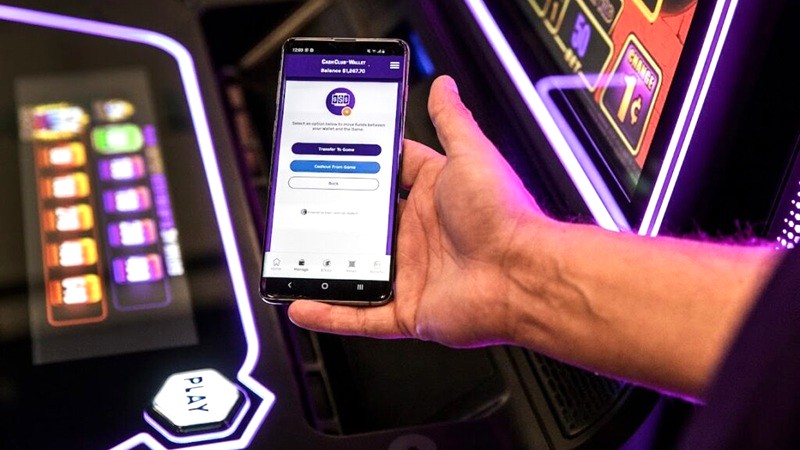
That is where some of the most interesting developments in 2026 are taking place. Station Casinos, for example, has been testing TrustedTap, a payment system that uses Apple Pay and biometric authentication to allow customers to fund participating slot machines directly from the gaming machine.
Rather than requiring customers to navigate a separate wallet or lengthy onboarding process, the concept is built around familiar mobile-payment behavior. Station Casinos also operates STN Cash, its existing digital wallet solution, which allows customers to fund games and cash out through a mobile application while linking activity to the operator’s loyalty ecosystem.
The direction of travel is significant because it suggests that the next generation of cashless gaming may be determined less by the sophistication of the wallet itself and more by how effectively technology fits into the behavior customers already have.
One casino’s retreat could become an industry lesson
The experience of Resorts World Las Vegas offers another important perspective on the evolution of technology. The property attracted significant attention when it opened in 2021 with one of the Strip’s most ambitious cashless gaming systems, connecting digital payments with gaming and other transactions across the resort.
In 2026, however, Resorts World began phasing out its cashless wagering system and reassessing the model. That decision could easily be interpreted as evidence that players are rejecting cashless gaming, but it may be more useful to view it as evidence that there is no single model for digital payments in a casino.
A proprietary wallet that requires customers to change established habits is a very different proposition from a system that allows players to use payment methods they already know, such as mobile wallets and contactless authentication.
The experience of Resorts World therefore provides an important lesson for the wider industry: digitalization will be most effective when it reduces friction rather than simply transferring traditional casino transactions into a new application.
The real prize is player relationship
The potential value of cashless gaming also extends beyond the payment itself. Once a customer uses an identifiable digital payment method, the transaction can potentially become part of the casino’s broader customer relationship, connecting gaming activity with loyalty programs and other spending across the property.
This creates opportunities for operators to understand how customers move between gaming, hospitality, entertainment and other services, while allowing them to develop more sophisticated engagement strategies. In this respect, cashless technology could help land-based casinos address one of the structural advantages traditionally associated with online gaming: the ability to collect and analyze customer activity throughout the entire digital journey.
Bringing similar capabilities into the physical environment does not mean turning the casino into an online product; rather, it gives operators additional tools to make physical experience more personalized while preserving the social and experiential elements that distinguish land-based gaming.
Digital payments could strengthen responsible gaming
The connection between digital payments and responsible gaming is another reason technology is attracting attention. The AGA has argued that modern payment systems can support regulatory objectives and create opportunities for new responsible-gaming tools.
Digital transactions can provide clearer records of activity and allow operators to introduce or strengthen features such as spending limits, transaction monitoring and other player-protection measures. This does not mean that digital payments automatically produce safer gambling behavior, and the way the technology is designed remains critical.
A cashless system that makes spending completely invisible could create different risks, while a system that gives players greater visibility and control over their transactions could provide additional safeguards. The important point is that digital payment infrastructure gives operators capabilities that are difficult to replicate when transactions take place exclusively through physical cash.
Technology should disappear into experience
For land-based casinos, the real opportunity lies in making the physical experience smoother and more convenient for players. The fundamental reasons consumers visit casinos have not disappeared with the growth of online gambling.
Players still value atmosphere, social interaction, hospitality, entertainment, and the sense of occasion that comes with visiting a physical property. Payment technology should therefore support those elements rather than compete with them.
The most successful systems may be the ones that become almost invisible to the customer, allowing a player to arrive, fund a game, play, collect winnings and continue enjoying the property without having to think about the technology behind each transaction.
This could also explain why the future of casino payments is unlikely to be defined by a simple transition from cash to fully cashless gaming. A more realistic model may be a cash-optional environment in which customers can choose between cash, cards, mobile wallets, and other approved digital payment methods according to their preferences.
Such an approach gives operators the benefits of digital infrastructure without requiring every customer to abandon established habits. It also allows the industry to continue testing different technologies and payment models while learning which ones genuinely improve player experience.
The future may be cash-optional, and much more seamless
The broader opportunity is therefore not to make the casino cashless for the sake of modernization, but to make it easier for customers to interact with the property. Digital payments can become a gateway to more integrated loyalty programs, more personalized experiences, stronger transaction visibility and potentially more sophisticated responsible-gaming tools.
The challenge is to ensure that these benefits are delivered without introducing unnecessary complexity at the point where the player wants to do something very simple: enjoy the casino.
The first phase of cashless gaming has shown that technology alone does not change consumer behavior. The next phase is likely to focus on making digital payments more familiar, intuitive and frictionless, using infrastructure that reflects the way people already pay in their everyday lives.
As operators continue testing mobile wallets, biometric authentication, direct-to-machine payments and integrated loyalty solutions, the land-based sector has an opportunity to turn payment modernization into something much larger than a transaction upgrade.
The future of casino payments may not be completely cashless, but it can become considerably more seamless, and that could be one of the foundations of the next generation of the land-based gaming experience.