





See more of G&M News on Google
Add as a preferred source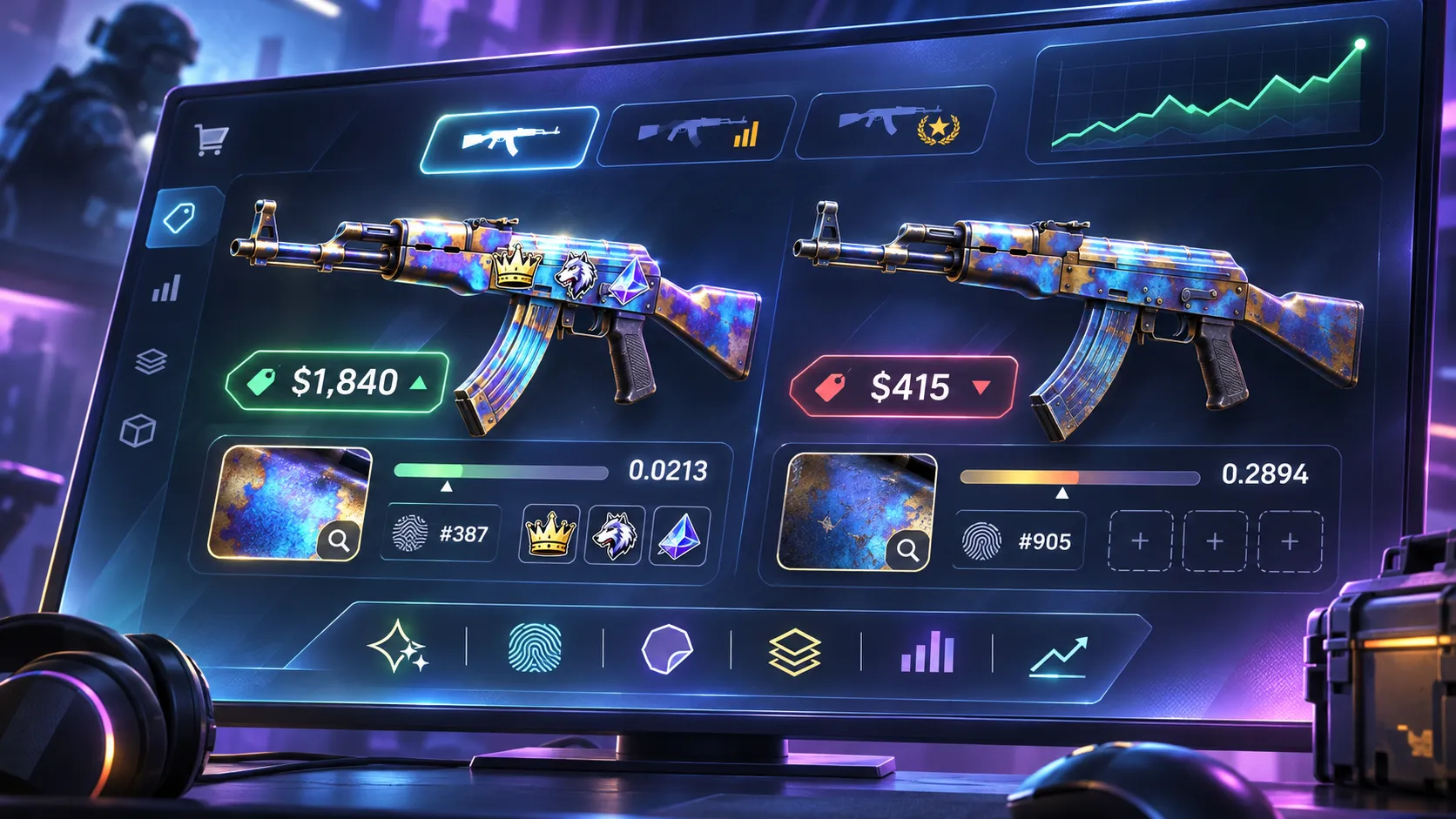
A player browsing a Counter-Strike 2 marketplace might encounter two versions of the same weapon finish with noticeably different prices. Both carry the same name, belong to the same collection and appear almost indistinguishable in their preview images. Yet one seller is asking considerably more than the other.
This is one of the more interesting characteristics of the Counter-Strike cosmetic economy. Unlike conventional digital products, individual copies of a weapon skin can possess attributes that distinguish them from otherwise comparable items.
Combined with collector preferences, limited availability and marketplace conditions, these characteristics create a pricing structure in which appearance represents only one component of an item’s perceived value.
Why Visually Similar Items Are Not Always Equivalent
Many digital cosmetics in multiplayer games are distributed as standardized products. Every player purchasing a particular character outfit receives essentially the same cosmetic item.
Counter-Strike operates differently because many of its weapon finishes can circulate between players through marketplaces and trading systems.
When comparing prices on a CS2 market, it is worth examining the characteristics of each individual listing rather than relying exclusively on the weapon name or thumbnail. Items that appear interchangeable may have different wear values, pattern templates or collectible additions.
These differences matter because buyers approach cosmetics with different expectations.
Someone purchasing a skin for regular gameplay may be satisfied with the least expensive version that looks appealing. A collector might specifically want an unusually low float value, a particular pattern or an item carrying older tournament stickers.
The two customers are effectively evaluating different products, even though both are interested in the same underlying weapon design.
Establishing a Fair Basis for Price Comparison
Before determining whether an item is unusually expensive, buyers need to establish which versions of a skin are genuinely comparable.
Browsing through a CS2 item catalog can help distinguish between available finishes, wear conditions and alternative item variants before examining individual marketplace listings.
Take the AK-47 Redline as an example. Standard versions, StatTrak versions and items belonging to different wear categories may appear together during a search, but their prices reflect different supply and demand conditions.
Even within the Field-Tested category, individual float values can vary considerably. Applied stickers may introduce another distinction, while differences in transaction fees can affect the final cost of purchasing otherwise similar items.
A meaningful comparison therefore requires more information than the general name of a skin.
The weapon model, finish, condition, numerical wear and item variant provide a basic framework for identifying comparable listings. Pattern information becomes particularly important for finishes known to have collectible variations.
Without establishing these characteristics first, an apparently expensive listing may be incorrectly compared with items belonging to a different segment of the market.
How Small Float Differences Influence Pricing
Float values provide a numerical representation of a weapon skin’s wear. They also determine which of the five condition categories an item belongs to, from Factory New to Battle-Scarred.
However, the boundaries separating these categories can produce interesting pricing differences.
Consider two copies of the same weapon finish. The first has a float value of 0.149, while the second has a value of 0.151.
The numerical difference is just 0.002, yet the first item belongs to the Minimal Wear category and the second is classified as Field-Tested.
Their appearances may be almost indistinguishable, but marketplace listings typically group them into separate condition categories. Buyers specifically searching for Minimal Wear items may never encounter the second version, even though its visual appearance is remarkably similar.
This creates distinct pools of supply and demand around condition labels.
There can also be premiums within individual wear categories. A Field-Tested skin with a float close to 0.15 may attract buyers looking for relatively clean examples without paying Minimal Wear prices.
At the opposite end of the scale, some specialist collectors seek exceptionally high float values. In these cases, the numerical rarity of the item may be more significant than the cleanliness of its appearance.
The economic relationship between float and price is therefore influenced by both condition classifications and individual collector preferences.
Pattern Variations Create Smaller Markets Within Collections
Certain Counter-Strike finishes use pattern templates that determine how textures are distributed across the weapon model.
The AK-47 Case Hardened provides one of the clearest examples. Individual patterns feature different arrangements of blue, gold and other colors across the weapon’s surface.
Although every copy belongs to the same underlying weapon finish, some patterns attract considerably more collector interest than others.
Fade finishes demonstrate a similar phenomenon. Buyers may pay particular attention to the extent and distribution of the gradient rather than evaluating the skin exclusively through its general condition.
Valve’s Counter-Strike Workshop resources illustrate how different finish styles and texture application techniques contribute to the diversity of weapon cosmetics.
From an economic perspective, pattern variations divide a single weapon finish into multiple smaller markets.
An ordinary example may have numerous comparable listings, while a sought-after pattern might have relatively few. This limited availability can make determining an appropriate price more difficult.
Nevertheless, an uncommon pattern is not automatically a valuable one. A sustainable premium requires buyers who recognize the characteristic and are willing to pay for it.
Scarcity is only one side of the pricing equation.
The Added Complexity of Stickers and Customization
Counter-Strike allows players to personalize weapon finishes further through applied stickers and other cosmetic additions.
Older tournament stickers can carry historical significance, particularly when associated with recognizable teams or memorable competitive events. Their placement and compatibility with the weapon’s artwork can also influence collector interest.
However, valuing a customized weapon is more complicated than adding together the individual prices of its components.
Imagine a hypothetical weapon skin worth $40 with an applied sticker that would cost $100 to purchase separately.
The resulting weapon does not automatically become a $140 item.
Once a sticker has been applied, it cannot be recovered and sold independently. The customized weapon must instead be evaluated as a complete combination.
Some buyers may appreciate the sticker placement and historical associations enough to pay a premium. Others might prefer an unmodified version of the same finish.
This creates a situation where customization can increase an item’s value for one audience while making it less appealing to another.
For marketplace operators, these differences present a challenge because a standardized price estimate may not fully reflect the characteristics of a customized item.
Why StatTrak and Souvenir Versions Have Separate Prices
Another source of pricing differences comes from the alternative versions available for certain weapon finishes.
StatTrak weapons feature a counter that records eligible kills made by their owner. Souvenir weapons, meanwhile, are associated with particular competitive events and may carry tournament-related characteristics.
Although their underlying artwork can closely resemble standard versions, these items appeal to different collecting preferences.
A player interested in tracking their in-game achievements might prefer StatTrak, while an esports enthusiast may place greater value on a Souvenir item connected to a memorable tournament.
Other buyers may actively prefer standard versions because they want the original artwork without additional visual elements.
The availability of each variant also differs according to its original distribution method. As a result, standard, StatTrak and Souvenir items can develop independent pricing structures.
There is no universal percentage that can reliably determine how much more an alternative version should cost.
Marketplace Conditions Can Change the Final Price
Differences between listings are not always connected to the items themselves.
Transaction fees, payment methods, currency conversion and marketplace liquidity can influence the prices buyers encounter across different services.
Steam’s Community Market FAQ explains the transaction framework within its own ecosystem. Steam Wallet funds cannot be withdrawn as cash, creating a different economic environment from services that support eligible monetary withdrawals.
Consequently, prices displayed across separate platforms are not always directly equivalent.
Individual seller preferences introduce another variable. Someone looking to sell quickly might list an item below comparable offers, while another seller could maintain a higher asking price for an extended period.
This makes the distinction between asking prices and completed sales particularly important.
A skin listed at a substantial premium has not necessarily demonstrated that buyers consider it worth that amount. Where reliable transaction histories are available, recent completed sales of genuinely comparable items can provide a more informative basis for evaluation.
Unusual collectibles remain more difficult to price because relevant sales may occur infrequently.
Digital Value Goes Beyond Visual Appearance
The Counter-Strike skin economy demonstrates how apparently similar digital products can develop substantially different market values.
Numerical wear, pattern variations, collectible additions, item variants and marketplace conditions all contribute to the final price of an individual weapon finish.
However, the significance of these characteristics depends on actual buyer preferences. An exceptional float value might justify a premium for a specialist collector while offering little additional enjoyment to someone purchasing a cosmetic for regular gameplay.
The same distinction applies to rare patterns, historical stickers and alternative item variants.
For consumers, understanding these differences can prevent unnecessary spending on attributes they do not personally value. For marketplace operators, it highlights the importance of presenting sufficient information to support informed comparisons.
Ultimately, two CS2 skins can look almost identical while representing different products within the broader digital collectible economy. Understanding what buyers are actually paying for is considerably more useful than judging an item’s value by its appearance alone.