





By Diana Guerrero, journalist at G&M News.
For years, cashless gaming has been presented as the next step in casino modernization. Yet, in the United States, the transition is proving more gradual than the industry once anticipated. Gaming and payment executives are discussing the practical challenges of expanding cashless wagering, including technology integration, implementation costs, and customer adoption. Rather than replacing cash entirely, operators are exploring different ways to let customers fund gaming activity digitally while preserving familiar payment options. This hybrid approach reflects the reality that casinos serve diverse audiences with different preferences and levels of comfort with digital tools.
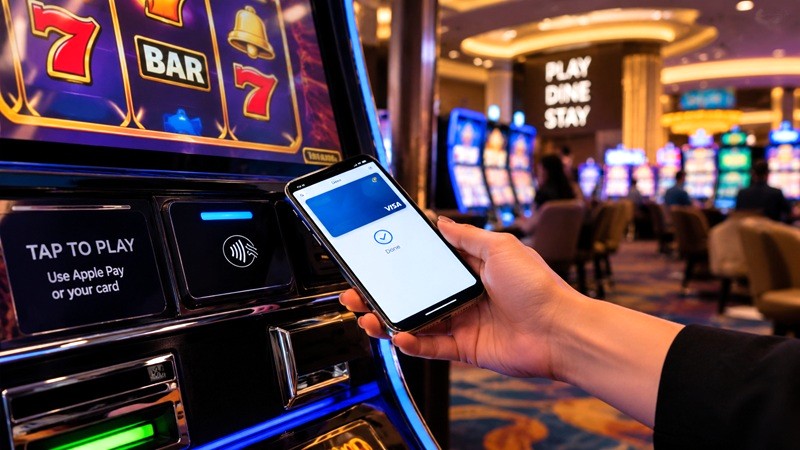
One example is Station Casinos, which began testing TrustedTap, a solution developed by Adostics that allows customers to use Apple Pay linked to a debit card to fund compatible slot and video poker machines. The trial, reported in July 2026, was taking place at Durango casino bars, Wildfire Anthem and Seventy Six taverns, subject to the applicable regulatory process. The system is designed to let players transfer funds directly to a machine without first visiting an ATM or cash kiosk. It also works with existing casino infrastructure, illustrating how operators can introduce new payment methods without replacing their entire gaming-floor systems.
Other companies are pursuing different models. Station Casinos has also deployed IGT’s Resort Wallet and IGTPay technology through its STN Cash app at several Las Vegas properties, while Boyd Gaming has introduced cashless solutions in partnership with Aristocrat. These examples show that cashless gaming is not a single product category: it can include mobile wallets, account-based systems, debit-card funding and technologies integrated with casino management platforms. For operators, the choice depends on the existing technology environment, the cost of implementation and how easily customers can use the service.
The gradual adoption also highlights the importance of operational considerations. Executives are analyzing how digital payment options can reduce the amount of cash circulating on the gaming floor, while noting that integration between suppliers and the investment required to upgrade systems remain important barriers. Smaller casinos may face greater financial constraints when introducing new technology. Operators must also consider how payment solutions fit with existing loyalty programs, ticket-in, ticket-out systems and cage operations. As a result, the move toward cashless gaming is likely to involve incremental upgrades rather than a uniform transition across the market.
Looking into the future, the next phase of casino payment modernization will therefore depend less on eliminating cash than on giving customers practical choices. Digital funding can offer convenience and create electronic transaction records, while cash remains an important part of the gaming experience for many patrons. Operators and technology suppliers will need to balance ease of use with security, responsible gaming tools and reliable integration with existing systems. In the near term, the most viable model for many U.S. casinos may be a hybrid environment in which digital payments complement traditional methods, allowing properties to modernize at a pace that reflects their customers, infrastructure, and investment priorities.