





See more of G&M News on Google
Add as a preferred source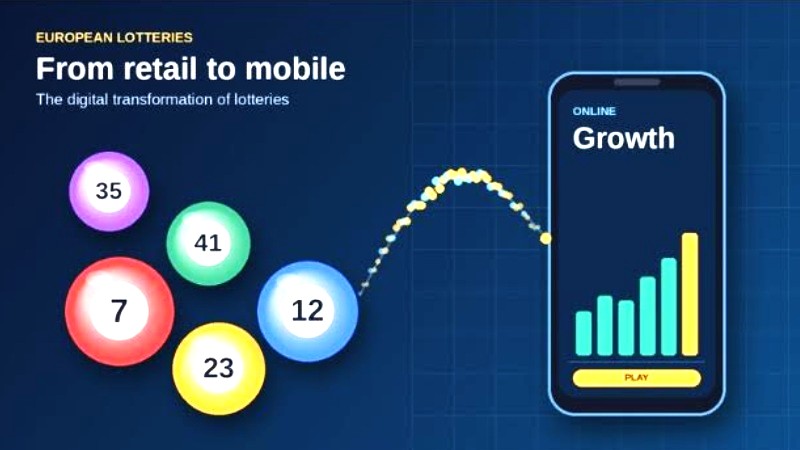
By Diana Guerrero, journalist at G&M News.
Digital channels are gaining weight within the lottery sector in Europe, even as retail remains an important part of the business. Traditional lottery operators are adapting their business models to reach consumers who increasingly expect accessible and convenient gaming experiences.
Finland’s Veikkaus illustrates this shift. In its first-half of 2026 results, the state-owned operator reported that digital channels accounted for 64.5% of its GGR. The company also highlighted growth in its online business and investments in technology as key elements of its strategy. This transformation is particularly relevant ahead of Finland’s move to a license-based market in July 2027, when licensed operators will be able to compete in areas such as online betting and online casino games, while Veikkaus retains exclusive rights over lotteries, scratch cards and physical gaming machines and casinos.
France’s FDJ United provides another example of how traditional lottery businesses are evolving into broader gaming groups. Through its Play Forward 2028 strategy, the company has organized its operations across lottery and retail sports betting in France, online betting and gaming, international lottery, and payments and services. Its objectives include increasing digital penetration in the French lottery business and strengthening its position in the European online betting and gaming market. This approach reflects a broader trend: lottery operators are seeking to diversify their offerings and build stronger relationships with customers across different gaming channels.
Cooperation is also becoming part of the sector’s response. Five national lottery operators (Danske Spil, FDJ United, Norsk Tipping, Svenska Spel and Veikkaus) collaborate through the Lotteries Entertainment Innovation Alliance (LEIA), which in 2026 selected Scientific Games as a digital partner to support the development of games for their respective markets. The collaboration aims to accelerate innovation, strengthen the operators’ market positions and respond more effectively to changing entertainment preferences. Meanwhile, Sweden’s Svenska Spel reported that online channels represented 62% of their revenue in the fourth quarter of 2025, illustrating the increasing weight of digital distribution in established lottery and gaming businesses.
However, the digital transition is not only about developing new products or attracting online customers. European lottery operators are also addressing the challenges posed by illegal gambling and the need to maintain consumer protection standards. In 2026, European Lotteries established a task force on illegal gambling and launched a limited pilot project, in cooperation with a specialized online risk-intelligence company, to monitor illegal gambling content and identify unauthorized operators in France, Greece and Poland. Together, these developments show how the sector is adapting to a more competitive environment in which technology, regulation, customer experience and responsible gaming will play an increasingly important role in the future of European lotteries.
Overall, it is clear that European Lotteries members significantly support society with a commitment to consumer protection, and efforts to navigate challenges, while providing regulated gaming services in a controlled and sustainable environment.